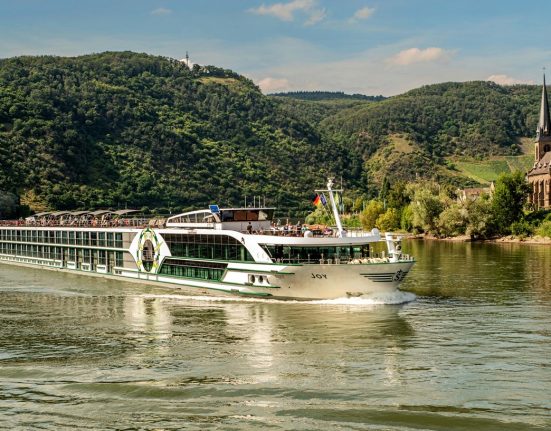
Celebrity Cruises has long been known for breaking down boundaries. It led the culinary scene for years in the 1990s with the addition of acclaimed chef Michel Roux to its team, before the new millennium brought in new and innovative ships that were bigger – and more fantastic – than the last.
By Aaron Saunders
But heads still turned at the line’s announcement on 29 January 2025 that it intends to build 10 brand-new river cruise ships destined for the waterways of Europe. Celebrity’s product has, in recent years, morphed into a bigger-is-better philosophy. It has jettisoned its oldest, smallest oceangoing ships and has largely pulled out of its expedition niche in the Galapagos.
Now, Celebrity is embarking on what could be its biggest gamble yet: a bid to transfer its premium, big-ship ocean cruising product to the rivers of Europe, entering an already crowded marketplace on the assumption that its roster of passengers will be all too happy to jump ship.
At stake is more than just Celebrity’s own ambitions: succeed or fail, Celebrity’s river cruise experiment will be the litmus test for other oceangoing cruise lines looking to enter unfamiliar territory.
A history of dabbling in other markets
The announcement, when it came, was not what industry-watchers were expecting. “We’re thrilled to announce our entry into the river cruise market through our Celebrity Cruises premium travel brand,” said Jason Liberty, president and CEO, Royal Caribbean Group. “Our guests and travel partners should expect us to do what we do best – innovate and elevate the river cruise experience as we meet the growing demand for intimate, culturally enriching travel experiences.
“With about half of our guests having experienced or intending to vacation on a river cruise, we know they will enjoy Celebrity’s elevated offering on the river. By leveraging our valuable loyalty programmes across our three brands, we will deepen customer engagement and further our ability to keep guests within our ecosystem of vacation offerings. We are the best in the world at delivering the vacation of a lifetime, and this is the latest example of how we are building the capabilities to deliver a lifetime of vacations.”
At first, the idea of Celebrity – with its fleet of multi-thousand-passenger vessels – entering the river cruise market seems odd. After all, the line has made a point in recent years of following in the footsteps of parent company Royal Caribbean Group’s design ethos by building ships that are always bigger, better, and flashier.
But a closer look reveals that Celebrity has always dabbled in the unconventional. The cruise line that would become Azamara, with its former R-class ships inherited from the collapse of Renaissance Cruises in 2001, was originally intended to operate under the Celebrity Cruises brand.
The line also dabbled early on in expedition cruising in the Galapagos, purchasing the former Sun Bay and rechristening it as Celebrity Xpedition in 2004 – a role the ship would serve for the line until it was sold to Lindblad Expeditions and removed from Celebrity-branded service this year.
In fact, Celebrity briefly went all-in on the Galapagos, purchasing two additional vessels for Galapagos service in 2016 before the purpose-built Celebrity Flora went into service in 2019. Now, Celebrity has eliminated all but Celebrity Flora from its Galapagos roster, and, given its similarities to near-sister vessel Silver Origin, also based in the Galapagos, one wonders how long Celebrity Flora will remain in Celebrity-branded service.
Celebrity’s retreat from the expedition market may make sense when viewed through the lens of the line moving its focus to ocean and river cruising. But the transition from oceangoing cruise product to the European river market has pitfalls that other would-be operators learned the hard way.
Ghosts of the Danube
Europe’s waterways are littered with the ghosts of oceangoing cruise lines that tried and failed to make inroads into the river cruising market.
Chief among these is luxury line Crystal, which launched its luxury river product in 2016 with a second-hand ship that it refurbished and renamed Crystal Mozart. The line then built a fleet of four newbuilds that, while earning praise from critics and passengers alike, were rumoured to be sailing well under capacity. Even before the Covid-19 pandemic tanked the river cruise arm (and, eventually, Crystal Cruises itself, under its previous Genting Group ownership), the line was insisting its river ships were sailing 97% full, even as it shopped them around on the second-hand market.
After Crystal’s bankruptcy, and its relaunch by UK-based A&K and former Silversea head Manfredi Lefebvre d’Ovidio, the river cruise fleet was the only asset not immediately snapped up. The line’s expedition fleet was sold to other buyers, and A&K quickly bought the laid-up ocean fleet. Currently, the remaining Crystal ships are split between Riverside Luxury Cruises and Uniworld.
Crystal isn’t alone in its experience. UK-based Fred. Olsen Cruises dabbled in the river cruise market pre-pandemic as well, using a second-hand vessel called the Brabant – the former Amadeus Princess – which it debuted in 2018. Owned by Lüftner Cruises, operated by Amadeus but marketed by Fred. Olsen, the line abandoned its only river cruise plans in 2020 in order to restart its oceangoing operations. In the post-pandemic environment, the line has shown no interest in a European river cruising restart.
Then there’s the sad story of German ocean and river cruise operator Peter Deilmann. Founded in 1968, the company had an impressive and luxurious fleet of river and oceangoing vessels, but it was forced to shutter its river operations in 2009 following the global recession. It was already hurting from negative press associated with its chartering of the ill-fated Air France flight 4590 Concorde that crashed in July 2000 upon takeoff from Charles de Gaulle Airport, resulting in the deaths of 109 passengers and crew. Its ocean division struggled along until 2015, when the company abruptly folded, with MS Deutschland now sailing as World Odyssey for Semester at Sea.
Many existing companies choose to enter the river cruise market through an intermediary operator like Fred. Olsen did in its partnership with Lüftner and Amadeus. Scylla AG, for example, provides the ships and crews for multiple brands, including Tauck, Riviera River Cruises, Viva Cruises, and others, in much the same way that operators charter oceangoing vessels for set periods of time.
In fact, cruise companies starting on the rivers of Europe and moving to ocean cruising are scarce, too, save for one company that has had meteoric success: Viking. And long-time head Torstein Hagen, who has always taken an anti-gimmick stance on his cruise products, won’t want to cede any ground to Viking’s forthcoming competitor.
Viking conquest of Europe
While European river cruising veterans like AmaWaterways, Avalon, and Uniworld are unlikely to want Celebrity Cruises to join the party, it is industry juggernaut Viking that has the potential to throw the biggest wrench into Celebrity’s ambitious plans.
Since its inception in 1997, Viking has been working quietly but diligently throughout every major European river, buying up docking space in towns and locations it doesn’t yet service, and securing prime berthing space in cities it already does. Cruise past any major European river port of call – Budapest springs to mind – and you’ll see that the vessels in the premium spots are, almost without exception, Viking river cruise ships. Viking is to European river cruising what Princess and Holland America Line are to Alaska: for better or for worse, grandfathered into the best berths, docking times, and itineraries.
Viking has the edge with its massive fleet of Viking Longship river vessels which, since their introduction in 2012, have set the standard for premium river cruising throughout Europe. They aren’t the most luxurious – companies like Uniworld and Tauck have that corner of the market sewn up – but they offer a fair cruise at a reasonable price.
It’s unclear how much of its homework Celebrity has done when it comes to the logistics of sailing on the rivers of Europe. While Viking’s main headquarters are located just north of Los Angeles, it maintains a separate office in Basel, Switzerland, just for its European river operations. It has firm relationships with its shipyards, a fleet of branded Mercedes motor coaches, and preferred tour guide and hotel partners across the continent; it has also been pumping out new ships non-stop since 2012.
Not that Celebrity, and parent Royal Caribbean Group, will not have thought of this. But the line, which operates under flags of convenience on the oceans (as most oceangoing cruise operators do), may find operating within the confines of Europe and its many member nations to be a brand-new world of logistical hurdles.
Can Celebrity translate its product to the rivers?
There is, finally, the question of how exactly one translates the Celebrity Cruises oceangoing product to the rivers of Europe.
For the past decade, Celebrity has been promoting its Edge-class vessels as the last word in cruise ship design, with dazzling entertainment, light shows, cantilevered decks, and the Magic Carpet – a hydraulic tender platform turned bar turned exclusive restaurant that’s coloured bright orange.
River cruising, however, is an unforgiving and desperately uncreative environment. Strict limits on length, width, and height imposed by narrow locks, low-hanging bridges, and variable water levels along the waterways of Europe all but obliterate the possibility for innovative design – at least physically. Every operator on the river has the same long, narrow “box” of a hull to play with. Engines must be aft. Propulsion must be Z-drives. Dining and lounge spaces are, by default, typically forward-facing. Any upper-deck structures, including railings, have to collapse to deck level to clear the lowest bridges.
What differentiates most river cruise operators is on the inside – something that Royal Caribbean Group, known for its elaborate exterior newbuilds – might find restrictive. That puts tremendous pressure on Celebrity to bring its most significant features to the waterways of Europe.
Does it transpose its luxurious ship-within-a-ship concept, the Retreat, to its river cruise product and go all-inclusive? How will it transport big-ship entertainment to the rivers of Europe when most river cruise vessels offer little more than a pianist and some guest lecturers, largely due to space requirements? How will it handle the differences of a European crew versus the more international (and heavily Filipino- and Indonesian-weighted) crews found on oceangoing ships, not to mention the differences in required pay?
So far, Celebrity hasn’t revealed plans in anything but the broadest terms, with president Laura Hodges Bethge stating, “Celebrity River Cruises will bring the quality and sophistication of our Edge-series ocean ships to the most iconic rivers, starting with Europe” – implying that, if the venture goes well, Celebrity could offer river cruises on other waterways around the globe.
With the product not debuting in Europe until 2027, Celebrity has time to figure these things out. Whether it rises to the occasion or ends up as yet another entrant on river cruising’s blooper reel remains to be seen.