

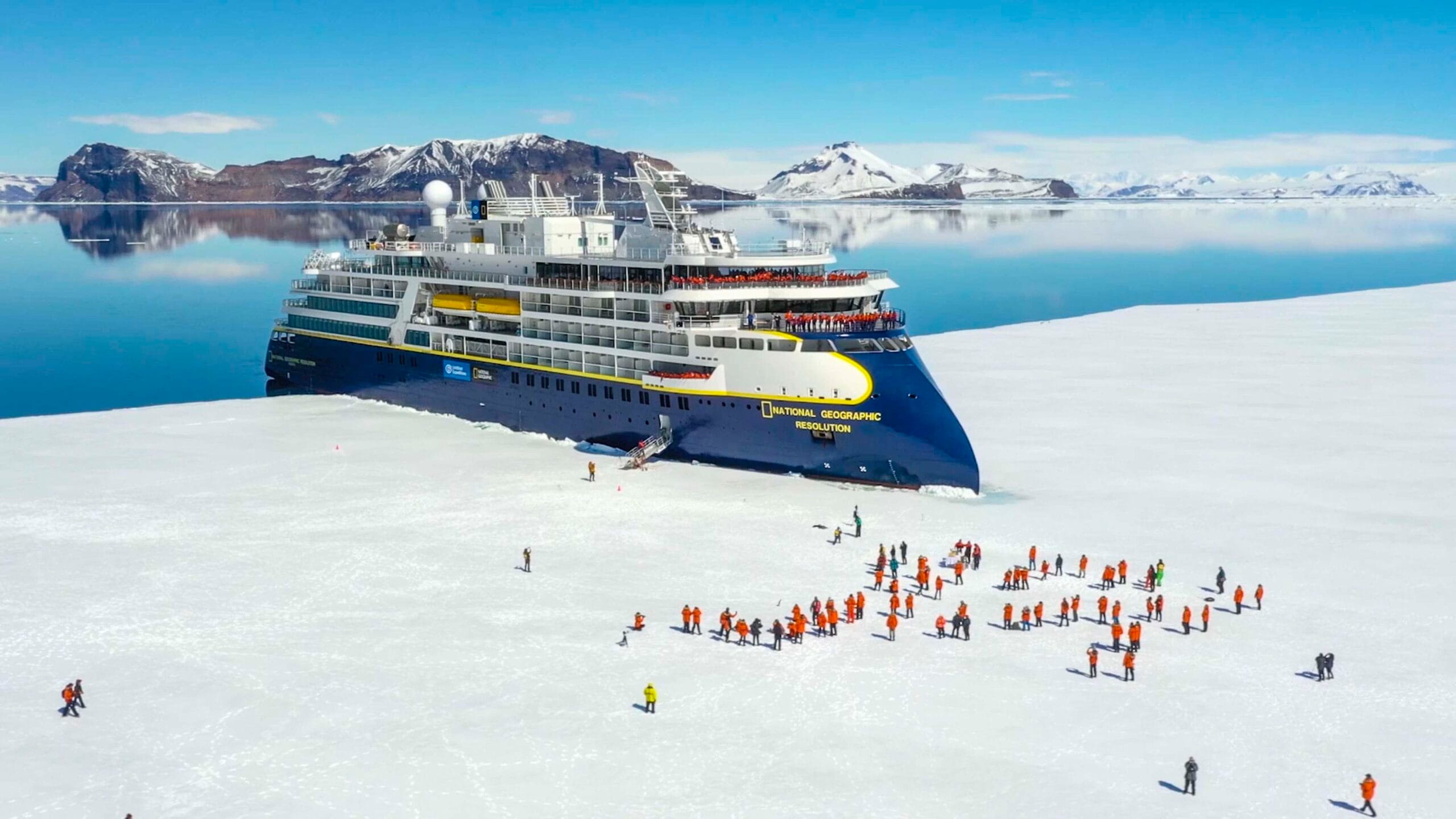
Broadly speaking, the post-pandemic recovery of smaller cruise line businesses should follow the same path and pattern as that of major cruise groups. But this sector is far more diversified and differentiated. The performances have varied, with the upscale segment powering ahead.
By Alan Lam
There are more than 90 independent cruise brands in operation today. Many of them are focused on specific source markets or destinations. This is also the segment where most new entrants are found, because of the relatively smaller size and specialised nature of the operation (although there are others, such as Virgin Voyages, who directly entered the bigger segment of the market).
In recent years, we have seen the launches of new brands like The Ritz-Carlton Yacht Collection, Havila Kystruten, Explora Journeys, and Compagnie Française de Croisières, among others. On the upscale end, besides Ritz-Carlton, there are other hospitality industry aspirants, like Accor and Four Seasons, poised to start cruise business with revolutionary newbuilds and formidable financial muscles.
The small, independent cruise line sector has two distinct segments: upscale/expedition brands, and brands focused on specific source markets. The former have performed better lately because of higher demand from the upper end of the consumer market, those who have weathered the economic storms better. This, we believe, has been one of the main driving forces behind the exuberance of the upscale and expedition cruise market.
Of course, spending power, however strong, will not matter if operations are suspended on account of a pandemic, which naturally has had an impact on even the best-performing upscale cruise lines.
But the recovery and prospect for this end of the market should be quicker and better than for the contemporary mass market. The story for operators focused on specific source markets would be quite different.
Revenue recovering
When we look at the latest full-year total tour revenue of Lindblad Expeditions Holdings, Inc., a picture of stronger recovery emerges. While revenues of all major cruise groups still languish well below those of the pre-pandemic peak, Lindblad has set a record only one year after suffering from an unimaginable setback.
In fact, Lindblad started recovering before the major mass-market cruise lines did. Its 2021 revenue performance was already much better than for 2020, while the revenues of major cruise groups suffered further declines. This suggested that the underlying demand for this segment was much sturdier. Perhaps this is the main reason that so many newcomers are entering this market with such a high level of capital investment.
Lindblad’s 2022 full-year tour revenue was 18.6% higher than its pre-pandemic peak – an impressive figure by any measure, especially having achieved it during times of social and economic upheaval.
This result did not come about solely because of the natural market demand. Wise strategic vision and other favourable actors were also behind the triumph. “Throughout 2022, Lindblad generated strong revenue growth as we successfully ramped our operations, returning to geographies we have been exploring for decades,” said Dolf Berle, the company’s CEO. “We also expanded our product offerings, with broader utilisation of our two new polar ships and further integration of our three acquired land-based travel companies.”
Even better results are anticipated for the coming year. “In 2023, we expect to further harness the expanded earnings power of the company and deliver strong growth from pre-pandemic levels, while continuing to build long-term shareholder value,” said Berle.

Source: Lindblad Expeditions Holdings, Inc.
Unfortunately, the same cannot be said about the specific-source-market-focused Fred. Olsen Cruise Lines (FOCL). Its 2022 full-year revenue, though showing remarkable improvement, still fell nearly 22% short of the pre-pandemic peak year of 2019. The line’s fortune has run parallel to those of major cruise groups. It is hoped that FOCL’s 2023 full-year revenue will surpass that of 2019, and by a healthy margin.

Source: Bonheur ASA
The difference in the pace of recovery between the two companies points to a much stronger demand in the upscale end of the market.
Interestingly, despite the record revenue, Lindblad’s number of guest nights sold in 2022, though having recovered strongly, was still 12% lower than in 2019. This suggested very firm pricing and, in this case, clear support for the assumption that the higher-end the market, the stronger the demand. Barring any unforeseen crisis, it is not difficult to see Lindblad’s guest-night number for 2023 surpassing its best year so far.

Source: Lindblad Expeditions Holdings, Inc.
Earnings constrain
In terms of profitability, Lindblad’s 2020 net-result performance did not outshine the major cruise lines. But the company has made major strides towards narrowing EBITDA and operating losses, by 82% and 46% respectively. This inspired further confidence in the segment’s future.
Because of higher operating costs, however, Lindblad’s net loss for 2022 did not narrow as much as had been hoped for, only by 9.2%. Every segment of the company’s expenses rose sharply. Its tour costs and sales and marketing expenses more than doubled. This should improve in 2023, when the dust of Covid-19 settles and the company brings costs under better control. Consequently, its net result should improve. Profitability is now within reach.

Source: Lindblad Expeditions Holdings, Inc.

Source: Lindblad Expeditions Holdings, Inc.

Source: Lindblad Expeditions Holdings, Inc.
Lindblad’s operating expenses rose by 46.8% between 2021 and 2022 to a historic high. This will be one area of focus for the company during 2023 and beyond if a quicker return to profitability is desired. Having said that, the increase in operating expenses was also brought about by the additional new ship, the National Geographic Resolution, which joined the fleet in the second half of 2021. The company therefore expected significantly higher operating costs from 2022 onward.
The future of companies like FOCL, as an independent cruise operator, may be in doubt, as its pace of recovery falls below the industry average, with occupancy of 61% in 2022 compared to its bigger contemporaries’ 75%.
While other companies’ losses were recovering decisively, FOCL’s were still deepening. In 2022, its full-year operating and net results suffered severe further falls, by 17.8% and 28.5% respectively. And its EBITDA, though improved, was still far from positive.
It must be stressed that FOCL’s profitability was already declining before the pandemic. The crisis was exceptionally devastating for this struggling business and its ageing fleet.

Source: Bonheur ASA

Source: Bonheur ASA

Source: Bonheur ASA
As well as the comparatively weaker revenue, FOCL’s earnings were impacted by much higher operating costs, which more than doubled between 2021 and 2022. Its depreciation and impairment charge alone rose from NOK 211 million to NOK 632 million in the same period. Running a diminishing fleet of old ships, it is hard to see how this situation can improve without major capital investment. The company’s 1993-built Braemer is now for sale, a step towards much-needed fleet renewal, perhaps.
Debt managed
FOCL is backed by a much larger conglomerate, Bonheur ASA. Factors such as rising debt, from the outset, will have at least a theoretically stronger bearing on standalone entities like Lindblad, which saw its long-term debt rising by another 2% at the end of 2022. This was a much-improved figure compared to the previous year’s 9.1%.
Lindblad’s debt rising trend is now much less severe than those of the mainstream mass-market cruise business. It has more or less brought it under control, especially given that the company’s long-term debt more than doubled between 2019 and 2020.
There is now definitely a levelling-off trend. As the company’s financial performance continues to improve, and no more newbuilds are forthcoming, we expect to see the debt level falling quite quickly in the coming years. It is another strong indication of the segment’s dynamism, and it helps to explain the unusually large number of recent start-ups in this segment.
Most new entrants to this segment have the advantage of deep-pocketed financial backing. Conglomerates like Four Seasons Hotels and Resorts, Accor Group, and Mediterranean Shipping Company S.A. are behind some of the upscale start-ups. In this context, the size of this segment’s debt becomes minuscule.
The example of Lindblad suggests that the upscale cruising business is the only segment of the industry to have brought the debt situation under reasonable control. But it must be borne in mind that Lindblad’s long-term debt level is still at a historic high. The risk remains undiminished.

Source: Lindblad Expeditions Holdings, Inc.
Forward momentum
While the fortunes of FOCL and their like were still shrouded in fog, the new year started auspiciously for Lindblad. On 3 January 2023, the company recorded its best booking day since 1979, a 14% increase on its previous peak. Its inbound call volume exceeded the best day in 2022 by about 30%.
One reason for the upscale and expedition cruise market to consistently outperform the contemporary mass-market segment in recent years is the bigger spending power of its customers, regardless of economic conditions. In better times, it is not difficult to imagine the extravagance of these customers. In harder times, they have more disposable cash reserves. While the rising interest rates may be financially crippling the less-well-offs, for them it is a windfall.
“Our customer base is interestingly using the interest on their savings to travel. So we’ve got one part of the market suffering but, with interest rates at the level they are, we are opening up another part of the market,” said Bernie Carter, senior vice president and managing director, EMEA, Oceania Cruises.
There are, however, hopeful signs among FOCL’s contemporaries. In January 2023, Ambassador Cruise Line reported its booking revenue up by 341% for the first two weeks of the month. About the same time, Saga Group updated the market by highlighting its improved ocean cruise booking performance.
“Our ocean cruise business saw strong customer demand and an encouraging pipeline of forward bookings,” said Euan Sutherland, Saga Group’s CEO.
Specialisation and customer loyalty play a major part in the success of these specific-source-market-focused brands. Saga Cruises, of course, also has the advantage of new ships, which FOCL does not yet have.
All the performance indicators point to the fact that the upscale and expedition cruise segment is currently the most dynamic. In fact, it can be said that it is thriving, while the opposite is true of the other independent segment.


