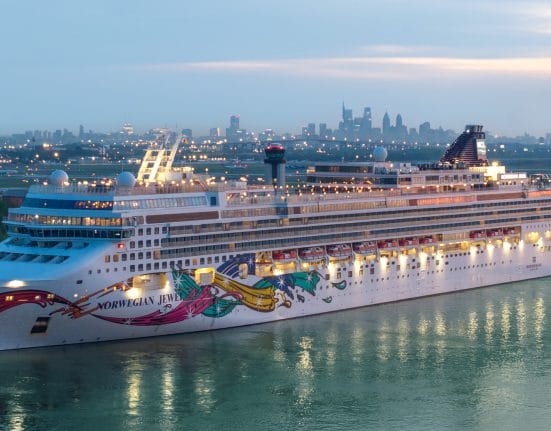
Days after Norwegian Cruise Line Holdings (NCLH) announced it had parted ways with former CEO Harry Sommer and replaced him with 10-year board member John W. Chidsey, activist investment group Elliott Investment Management LP is pushing for sweeping changes at the cruise conglomerate.
Elliott, which holds a 10 per cent stake in NCLH, issued a 59-page dossier in which it sharply criticised NCLH’s past management, corporate governance, and cost underperformance, along with a series of what it sees as strategic missteps.
Criticised for underperformance
Singled out for criticism are Sommer and former NCLH boss Frank Del Rio, who Elliott says were responsible for egregious spending and cost overruns. Much of the dossier focuses on Del Rio’s penchant for spending on works of art and lavish amenities for NCLH brands, which include Norwegian Cruise Line, Oceania Cruises, and Regent Seven Seas. It also singles out the extravagant launch for Norwegian Prima held in Iceland in 2022, featuring singer and godmother Katy Perry.
Elliott points out that NCLH is far below competitors Carnival Corporation and Royal Caribbean Group when it comes to performance on margins, total shareholder returns, valuation, and share price. It notes that NCLH shares are now trading below what they were when the company filed its IPO in 2013.
“Norwegian’s Board oversaw a culture of wasteful spending for more than a decade, driving significant cost underperformance across every relevant metric,” says the Elliott dossier. “The Company’s current cost plan fails to make any appreciable progress toward addressing this underperformance.”
Elliott also took issue with NCLH’s slow development of its own private island, Great Stirrup Cay, compared with Royal Caribbean’s Perfect Day at CocoCay, which is a major revenue driver. It highlighted a move away from Caribbean sailings, criticising the company’s Alaskan and European deployments.
“In 2022, management shifted to ‘premium itineraries’ in Europe and Alaska, away from ‘low-price’ Caribbean to ‘drive pricing’ because ‘the number-one driver of yields . . . [is] itinerary,” the dossier notes.
The report is also highly critical of the appointment of John W. Chidsey, a board member with no prior cruise management experience, Elliott notes, aside from his tenure on the NCLH board. Chidsey previously held the top spot at fast food sandwich company Subway.
Elliott Investment says it would prefer to meet with the board to discuss its concerns in more detail, but that it is prepared to take its case directly to shareholders at the upcoming annual meeting.
NCLH is scheduled to present its Q4 2025 and full-year 2025 earnings results during a conference call on 2 March 2026.
What change could look like at NCLH
That change is coming to NCLH is inevitable. But what that looks like remains to be seen. At a minimum, expect to see some sweeping changes to the NCLH board and executive line-up.
In the short term, a thorough review of assets and costs is likely. Elliott has already said it disapproves of the company’s itinerary and deployment strategy and its lack of focus on year-round Caribbean product. A move away from the brand’s more exotic itineraries – particularly at Norwegian Cruise Line, where the company offers Antarctica, Africa, and extensive South America voyages – may be on the cards.
Finally, Elliott may accelerate the retirement or sale of older tonnage. Expect Elliot to take a look at the entire fleet in terms of overall mechanical reliability, fuel burn, and other factors. Regent’s Seven Seas Navigator, would make an ideal candidate for sale, having already shown up in renderings for Avora Residences as the line’s Lumina — though the sale of the vessel has not yet been announced.
Elliott Investment and Southwest Airlines
Elliott has been down this road before. It acquired more than 10 per cent of US low-cost carrier Southwest Airlines in 2024, forcing a management shuffle and board change.
At Elliott’s behest, Southwest laid off 15 per cent of its employee base – its first layoff since its founding in 1966 – and instigated substantial changes to its brand and product.
The airline had long allowed guests to bring two free checked bags; that ended under Elliott. The investment firm also fought to initiate the airline’s first for-cost assigned seating, added premium and basic fare options, added red-eye flights, and restricted future flight credits to a single year.
Southwest suffered major damage to its brand and consumer reputation as a result of the changes, with reports in early 2026 of full flights, complicated boarding processes, and public outcry from the airline’s most loyal passengers.
Elliott sold most of its controlling stake in Southwest shortly before these changes took effect, having driven the stock up from its former lows.
It operated similarly in 2016 when it bought a stake in aluminum producer Alcoa. After forcing a restructuring that saw the company split into two entities, Elliott sold its shares at a 104 per cent profit.
There is also the tale of Japan-based Sanko Steamship. In 2012, the company owned or managed 185 ships, mostly tankers and bulkers. Elliott took control of the bankrupt company in 2013 and asset-stripped its properties and vessels, leading the company to exit the market in 2024 after 90 years in business.
In 2025, after an investment in PepsiCo, it forced the company to cut its product offering by 20 per cent in order to “drive revenue and profit growth”.
In 2015, it even foreclosed on an Argentinian warship in a bizarre incident that eventually saw the International Tribunal for the Law of the Sea order the vessel to be released.
One thing is clear: Elliott Investment has a proven track record of increasing shareholder value. What happens to those companies, their product, and their employees in the aftermath is less rosy.
— Aaron Saunders, Digital Editor