

Twelve years after cruise ferry operator Viking Line introduced the first LNG-powered passenger vessel, another pioneer bearing the Viking name is about to become the first in the world to operate hydrogen-powered cruise vessels.
When the late Jorge Mario Bergoglio was inaugurated as Pope Francis in 2013, a quiet revolution was taking place in the shipping world: the 57,565-gross-ton, 2,800-passenger cruise ferry Viking Grace was launched as the first LNG-powered passenger vessel in the world, setting in motion a new era of low-emission shipping.
Since then, LNG has become the next-generation [SC1] fuel of choice for most shipowners. A myriad of LNG-powered or LNG-hybrid passenger vessels have been built, and are still being built in seemingly increasing numbers.
But the controversy over LNG’s environmental credentials has grown in tandem. Despite its negligible sulphur and nitrogen oxide content, LNG is still a fossil fuel; burning it emits greenhouse gas and produces harmful methane slip. Among its fiercest critics is Torstein Hagen, founder and chairman of Viking, who confirmed at Seatrade Cruise Global that his company’s 2026 and 2027 newbuilds, Viking Libra and Viking Astrea, would be the world’s first hydrogen-powered cruise ships.
Leapfrogging LNG
While LNG is deemed to be the transition fuel, and others like methanol, ammonia, and biofuels are credible contenders as future marine propulsion energy sources, Viking chose to leapfrog this transitional stage and commit directly to hydrogen. This contrasts with all other major cruise lines, which are busy building LNG-powered ships. Viking is thus living up to its reputation as a “contrarian” cruise line.
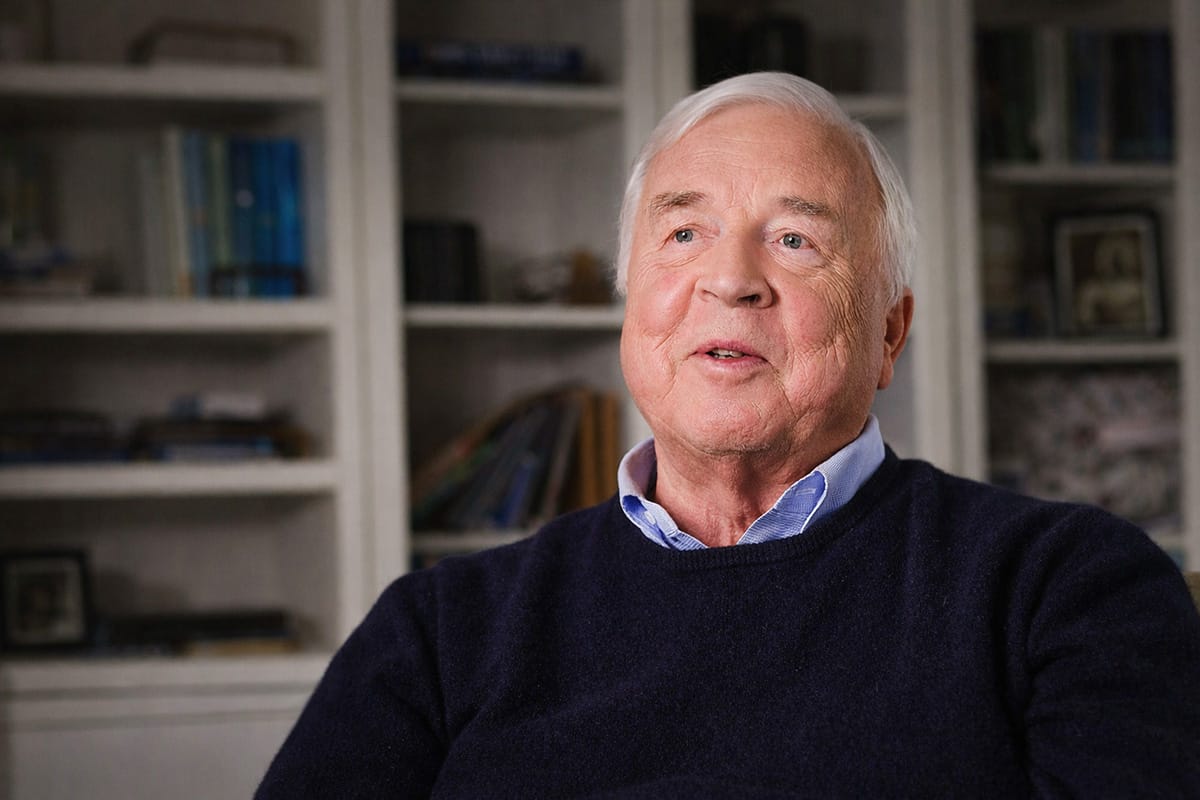
The idea of a hydrogen-powered cruise ship did not come out of a vacuum. Hagen and his team had thought long and hard about it. At Seatrade Cruise Global in early April 2025, in a one-to-one interview with Anne Kalosh, editor of Seatrade Cruise News and senior associate editor of Seatrade Cruise Review, Hagan demonstrated his extensive understanding of the viability of hydrogen as a marine propulsion energy source of the future, particularly when its sustainability and environmental credentials are compared to those of LNG.
Viking has conducted its due diligence, having carried out a number of studies on the subject. At the interview, Hagen explained the science behind its choice. “We have worked a lot on what is the right fuel for our ships,” he said. “I’ll show you a chart which we’ve worked on. It shows what type of fuels produce what type of greenhouse gas. And there are four fuels under investigation that we’ve looked at.”
Hagen singled out LNG as one of the most harmful fuels for the environment. This, he said, was nothing new. Studies carried out as far back as 2012, before the inauguration of Viking Grace, had already shown the harmful effects of LNG.
Hagen was highly critical of LNG, and his opposition appeared to have strong foundations. The issue was far greater than the dreaded methane slip. “You say the technology will improve, and so forth,” said Hagen, responding to Kalosh’s hypothetical argument on behalf of LNG. “But the whole point is, whatever you do with LNG, you can never get more than 30 per cent reduction [in emissions], even if there was no methane slip, so it’s not a solution. If you are looking for a zero-emission solution, and we have all kinds of operators saying our ambition is to have zero emission by 2050, there is no way to get there by using LNG.”
Based on this argument, Viking is now committed to hydrogen. Hagen believes it is the only viable pathway to get to net-zero. Taking one step at a time, he was also keenly aware of the challenges ahead. Both the ship size and initial distance travelled are limited. “So, we have now designed a ship together with Fincantieri. It is partially hydrogen-powered; it has six-megawatt fuel cells,” he said, referring his audience to the fuel cell on display in the exhibition hall. “We will have 34 of those to make up with double power of six megawatts, and this supports zero emission. To get to net-zero, we can’t see any other solution than this.”
During the interview, it soon became clear that much research and thinking had been invested in this project. Having extensively explored all other options, Hagen and his team became convinced that hydrogen was the right choice for Viking as the fuel of the future. “Of course, pure hydrogen has a number of other benefits,” he said. “You don’t need a big engine room, for instance, and so forth. Hydrogen is safe, but you have to meet requirements. The good thing about hydrogen is that it’s lighter than air. Should a leakage occur, it just floats up; it doesn’t go down and create a problem. I think technological problems associated with that will be solved. No issue about that.”
Hagen did acknowledge the relative high cost of hydrogen and offered at least a partial solution at this early stage. “Hydrogen is expensive, and that’s a hurdle right now,” he said. “But we have been able to compensate that a little bit, because we now have brought the capacity on the ship from 930 passengers to 990 or 998. Those additional cabins will help pay for the cost of the hydrogen.”
Prompted by Kalosh, Hagen speculated on the likelihood of obtaining credits from the EU under the FuelEU scheme to further offset the operating costs. “We think this is a clear path forward. The question is how soon hydrogen – the liquid hydrogen – as a fuel, will become cost-competitive. In the meantime, we go down this path,” said Hagen.
LNG grip
Ultimately, the fossil fuel of LNG will be replaced by a more sustainable fuel. This is a foregone conclusion. But LNG will not relinquish its position without a fight. A large number of LNG-powered ships are still being built. The LNG supply infrastructure is expanding, its supply chains continue to mature, and its fluctuating prices are factored into the operating-cost structure. A large proportion of shipowners have placed their bets on this fuel for at least another 10 years.
A recent survey by ICS Barometer Report revealed that more than half of shipowners around the world still believe that LNG will be the leading ship propulsion fuel in the next decade, compared to 18 per cent who believe it will be hydrogen.

Source: ICS Barometer Report 2023–2024
There is still a long way to go before hydrogen could take the place of LNG. The infrastructure and supply chain developments for hydrogen are nowhere near those of LNG.
Hagen was realistic about this prospect, and open to the possibility that Viking might be proven wrong about its choice, for one reason or another. “If we find out that we are wrong, we will admit that we have been wrong. But until then, this is the way forward for us,” he said.
Should he be wrong about choosing the hydrogen path, at least a valuable lesson would be learned. Hagen was willing to share his experience. “We like to be a bit different,” he concluded. “Both Fincantieri and Viking feel that our work should be an open source. We are prepared to share all our experiences with everybody. It’s a step forward, and we should not be the only ones to benefit from it. We’d like to have others join in.”
Regardless of the outcome, Viking has made a choice. Its endeavour is acknowledged, and a place in history is assured.

