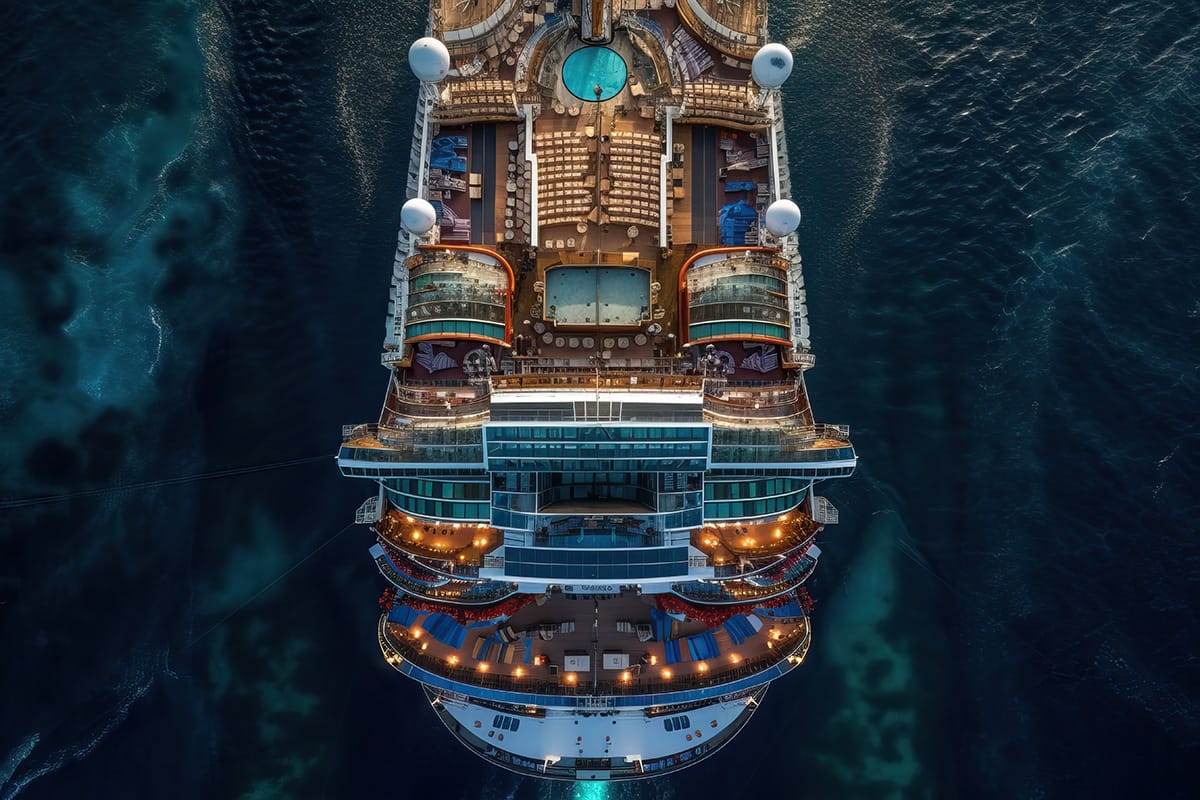
The transition to CO2-free fuels, or at least to fuels such as methanol that contain less CO2 than oil, can add to the cost of newbuildings because of the need to include more expensive equipment and more onboard space that the new fuel systems will require.
By Kari Reinikainen
Investment in fuel-saving technologies is gaining in importance for multiple reasons. As well as complying with the mandate to reduce emissions, reduced fuel consumption means lower operating costs, while the resulting reduction in space taken up by fuel tanks lowers capital expenditure. As new technologies evolve, there is a degree of uncertainty: not all technologies intended to save fuel may deliver expected results, and in these cases an investment can be unprofitable.
Adopting carbon-free fuels on cruise ships will require more space on board for several reasons. One is that carbon-free fuels like hydrogen and ammonia have lower energy densities than traditional fossil fuels like marine diesel or heavy fuel oil, which means that larger storage tanks are needed to achieve the same energy output.
“Ships will have to be designed with sufficient volume to accommodate the specific requirements of alternative fuels and new technologies for power generation,” said Marco Bognolo, vice president of basic design, Fincantieri Merchant Ship Business Unit.
When switching from heavy fuel oil to liquefied natural gas (LNG), ships already experienced a substantial increase in size because of LNG’s lower energy density and the more demanding requirements for technical operability and safety of the system. “Consequently, the shipbuilding price increased due to the higher costs for construction and outfitting required for a bigger vessel, the complexity of a customised design, and because the new technology claimed for a higher price also includes the associated costs for testing and certification processes,” said Bognolo.
An increase in newbuilding prices is anticipated also in converting to new carbon-free fuels, like e-methanol or e-hydrogen. “On the other hand, it is worth noting that, while the adoption of new fuels and innovative technologies for power generation will inevitably increase the cost of construction, such investments are becoming necessary for the environmental and economic sustainability of the cruise industry,” said Bognolo.
Future-proofing
Designing a ship with the flexibility to adapt to alternative fuels in the future is crucial to reduce the carbon footprint and comply with the evolving environmental regulations. Incorporating modular and interchangeable components would allow for easier retrofitting, thus minimising the need for major structural modifications.
“Adaptable fuel-storage systems, involving replaceable materials and insulation, might enable handling different fuel types and storage conditions,” said Bognolo. “Dual-fuel engines, which can operate on both traditional fuels and alternative fuels, provide flexibility to transition between fuels as they become more widely available and economical.”
Carbon-free fuels require complex storage systems, such as cryogenic tanks at extremely low temperatures for hydrogen and pressurised tanks for ammonia, which will demand more space on board. Handling and storage of alternative fuels also require considering specific safety measures, such as additional ventilation systems, safety zones, and protective barriers, which can occupy more space on the vessel.
“In summary, while incorporating carbon-free fuels in novel designs for cruise ships is essential for reducing emissions, the integration of these fuels comes with challenges related to the extra space for fuel storage and equipment and the consequent reduction of the available space for passengers,” said Bognolo.
Moving to fuel-saving technologies and energy recovery systems, he said that in general they were designed to provide a benefit which would be offset in a relatively short time, given the lower operating expenses over time. “The payback period may considerably vary, depending on fuel prices and cruise operational profiles,” he said. “However, considering the upcoming stringent requirements for decarbonisation, we may expect that energy-saving initiatives with a long payback time may become more attractive in novel ship designs to ensure a long-lasting compliance with the evolving environmental regulations.”
When considering new designs, the technical configuration often includes allowances in terms of space and weight for future adaptations and refitting, as necessary, to accommodate alternative fuels or innovative technologies not available at the time the ship is delivered. “This flexibility in design will come at a cost, but on the other side may help increasing the ship’s longevity,” continued Bagnolo.
Future-proofing also includes anticipating regulatory changes and investing in forward-looking technologies, such as fuel cells or batteries, preparing new ship designs for a future where certain alternative fuels might be mandated or become more economically viable, according to Bagnolo.
Fuel options
Very few fuels available to the maritime industry are carbon free, and the two that are – ammonia and hydrogen – have significant challenges and are unlikely to be the first choice for ocean-going cruise ships.
“Generally speaking, once they’re available at the volumes we need, which will take some time, maritime will likely have access to fuel sources that are carbon-neutral on a well-to-wake basis, so-called e-fuels,” said Tom Strang, SVP maritime affairs at Carnival Corporation & plc.
The carbon-neutral alternative fuels being looked at, such as biofuels and synthetic fuels for LNG and methanol, take up around the same amount of room as LNG does, so no additional onboard space is required. Hydrogen could require up to 10–12 times the space of conventional fuels, so it is unlikely to be practicable.
However, it should be kept in mind that with future engine technologies under development – many with better energy efficiency than internal combustion engines – we may see that less space is ultimately needed, according to Strang.
Marcus Högblom, head of passenger segment at ABB Marine & Ports, pointed out that cruise ships built today are more efficient and consume less energy per guest than ever before, but they also come under a regulatory framework that has been agreed by consensus at the IMO, which set out to achieve net-zero greenhouse gas emissions by around 2050.
“Any additional energy-saving devices, optimisation technologies, new fuel arrangements, or retrofitted systems installed to future-proof against these requirements will inevitably involve capital costs, but they can also be assessed based on ROI [return on investment],” he said.
Higher costs
Peter Shaerf, managing director of AMA Capital Partners in the US, said that, generally speaking, the new fuel technology would cost more, but the exact additional cost would be difficult to gauge, as newbuilding prices in general have risen sharply in the recent past. The cost increase would also depend on which alternative fuels would be used.
Copenhagen-based shipping bank Danish Ship Finance, in a market report released in May, said that strong newbuilding contracting activity, distributed between relatively few shipyards, had pushed newbuilding prices up sharply.
“The average newbuilding price bottomed out in November 2020 at index 125 and has since strengthened to index 166 (+33%). Current newbuilding prices are among the highest 15% seen since 2000,” the bank said, adding that Chinese owners remained the biggest investors in newbuildings, with their investments in gas carriers driving up the newbuilding price.
The bank also said that decarbonising the shipping industry would eventually require the introduction of new, greener fuels. For most shipowners, the first steps are about improving energy efficiency. Front runners are investing in digital capabilities that are starting to constitute barriers to entry.
While many owners are investing in new ships with dual-fuel engines, only those who invest in long-term fuel offtake agreements with alternative fuel producers would be able to offer green transportation. “Owning vessels with dual-fuel capabilities per se may not be enough to translate the industry’s energy transition into a value-generating opportunity,” Danish Ship Finance pointed out.
According to Strang, although larger ships do cost more, the recent trend has been for increasing ship sizes anyway, as the economies of scale are significant.
Design challenges
While much of the debate focuses on a choice of fuels, decarbonisation is fundamentally a design challenge. Incorporating a new fuel or new technology, or just improving a vessel’s existing performance, presents a major challenge at the design stage, whether for a newbuilding or a retrofit project.
“The choices made during the design phase today will have lasting implications for the owner over the course of decades, thus exposure to the EU’s ETS (Emissions Trading Scheme) or other carbon pricing, and CII (Carbon Intensity Indicator) index ratings, will be essential commercial considerations for any ship owner or operator,” said Guido Schulte, managing director of Elomatic Maritime Technologies GmbH.
Future-proofing design philosophy is not entirely new: smart engineering has always involved anticipating new developments and being prepared to adapt flexibly and quickly. Shipowners who have previously followed this approach may not experience a significant increase in design costs, according to Schulte.
The real game-changer now is the omission of “grandfather rules” and the introduction of a tightening regulations regime. “Consequently, regardless of the fuel expenses, everyone is compelled to optimise and innovate, perhaps more so than ever before. This inevitably results in increased efforts for design and engineering, even for simpler ship types,” Schulte told CruiseTimes.
That said, the savings achieved through such optimisations may offset a significant portion of the additional costs associated with increased design efforts. In design, provisions will have to be made to allow ships to change the fuel they will use during the latter part of their lifespan. This adds costs to both design and construction of the ship.
“The ‘smart’ aspect lies in the ability to identify and address the most critical aspects of the work during the early stages,” Schulte said. “These are the elements that could potentially cost 100 or 1,000 times more if deferred to a later stage. Missing crucial measures during the concept phase could result in the vessel incurring significant conversion expenses, potentially leading to early financial losses.”
It is therefore essential that a design partner can thoroughly evaluate all options at the design stage, and model how they will perform for ensuring the vessel’s long-term profitability and reliability. “This requires significant, dedicated resources – one small change at the design stage can have major impacts on operations, and vice versa,” Schulte told us.
Shipowners should also bear in mind that new technologies typically are subject to multiple design iterations until they reach a level of maturity and testing to be considered fit for installation on board. That being said, practically all significant innovations have encountered major or minor challenges when transitioning into real-life applications and operations.
“I am confident that we will encounter similar situations in this context as well,” Schulte said. “This underscores the importance of having ample maritime research, development, and innovation (RDI) funding to mitigate the commercial risks associated with fostering a much-needed entrepreneurial and innovative spirit within the industry.”
Despite the uncertainties and possible challenges, the anticipated high costs of green fuels provide a significant incentive to invest in energy-saving devices with rapid payback periods. “Similarly, the impending CO2 costs associated with fossil fuels will serve a similar purpose in the near future. The critical challenge lies in striking the delicate balance that will ultimately enable us to meet climate targets while sustaining a thriving maritime industry and global trade,” Schulte concluded.