

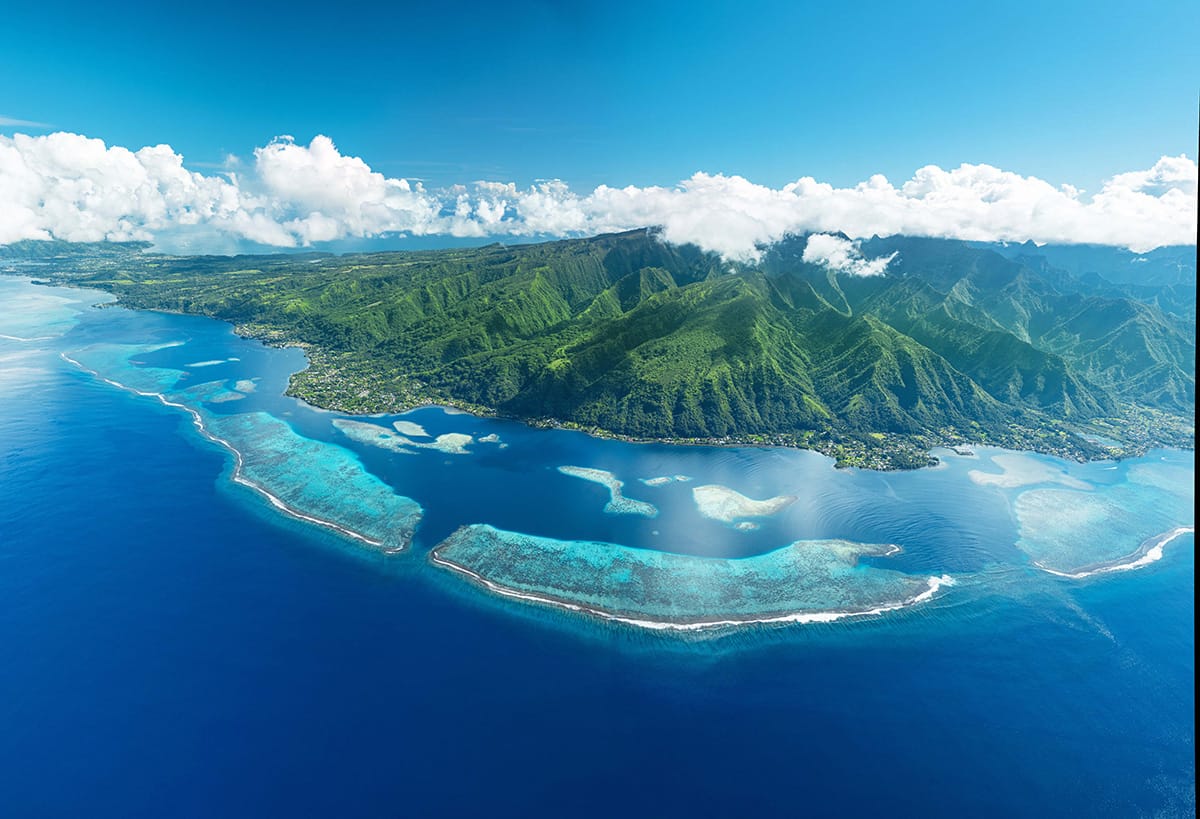
With the arrival of newbuildings and new players, the post-pandemic Oceania cruise market is showing definitive signs of maturity, but major hurdles remain in place.
By Susan Parker
Australia, New Zealand, and their neighbouring countries, such as Fiji, Papua New Guinea, and others in the South Pacific, suffered some of the hardest hits during the pandemic, partly due to their comparatively late re-entry into the market.
The first post-pandemic 2022–2023 season was a positive one, despite the borders in Australia not opening until April 2022 and in New Zealand until July 2022. But it was not without its problems.
Like so many other places worldwide, Australia “really struggled coming out of the pandemic in delivering destinations vis-à-vis staffing, buses, coach drivers, et cetera, but we are back now delivering what is expected,” said Jill Abel, CEO of Australia Cruise Association (ACA). New Zealand experienced similar troubles, which are still ongoing, in part due to the late return of tourism to the country.
For the 2023–2024 season, record numbers are being reported – as they are in Fiji, Papua New Guinea, and some of the countries in the South Pacific Cruise Alliance – signifying that this region’s cruise business is back on its feet.
But it is not all plain sailing, as Joel Katz, managing director of CLIA Australasia, told CruiseTimes: “Australia’s cruise industry, while currently experiencing strong passenger demand and significant economic contributions, faces a cautious outlook. The enthusiasm of Australian cruisers and the economic benefits they bring are tempered by operational and regulatory challenges, which could impact future growth.”
Indeed, Carnival Corporation & plc, for instance, cited these challenges when announcing recently that the P&O Cruises Australia brand would be folded into Carnival Cruise Line (CCL) in March 2025. Two of its three ships, Pacific Encounter and Pacific Adventure, will join the four CCL ships deployed in South Pacific, while Pacific Explorer will exit the fleet. Carnival stated that it would have seven cruise lines, operating 19 ships, calling on 78 destinations in this region in 2025, representing almost 60 per cent of the Oceania market.
Josh Weinstein, CEO of Carnival Corporation & plc, explained the decision: “Given the strategic reality of the South Pacific’s small population and significantly higher operating and regulatory costs, we’re adjusting our approach to give us the efficiencies we need to continue delivering an incredible cruise experience year-round to our guests in the region.”
While acknowledging the key role that the iconic 90-year-old brand has played in building a thriving cruise industry in the region, Abel said: “We are delighted that Carnival Cruise Line is committed to continuing their strong presence in this region. Changes like this allow for organisations to continue to perform in a robust manner and respond to evolving market requirements. We will continue to work as an organisation to advocate for the industry, which is a major contributor to Australia’s visitor economy.”
In 2023, about 1.25 million Australians embarked on ocean cruises, slightly up on 2019 figures. Australia is now the fourth-largest cruise market in the world, after the US, UK, and Germany. In the 2022/23 financial year, cruise tourism generated a record Aus$5.63 billion (€3.45 billion) in total economic output, supporting over 18,000 jobs across various sectors of the industry, including 62 Australian ports and destinations, according to figures released by CLIA and ACA.
For the 2024–2025 season, numbers in Australia are looking very stable. Abel said: “The fly-cruise and European markets are showing strength, and we are hoping next season will be strongly international. Being a long-haul destination, I think the opportunity for combining cruise with land-based has a lot of potential. It is safe to say that we are seen as a safe destination, and that may be a real positive.”
For New Zealand, which has its own set of challenges, however, numbers are due to be 15–20 per cent down for its 17 ports or anchorages. Jacqui Lloyd, CEO of New Zealand Cruise Association (NZCA), said: “This is due in part to macro issues such as geopolitical concerns, including deployment difficulties because of the Red Sea, fuel costs, and foreign exchanges, and micro issues such as increased costs within the Oceania region, the risks associated with biofouling for Australia-based vessels, and some regulatory barriers.”
The good news is that while some lines have reduced calls, others, such as Celebrity Cruises, Norwegian Cruise Line, and Viking Cruises, have increased them. Passenger ratings are still high, according to Lloyd.
The debutants
The dynamism of the region’s post-pandemic cruise business is amply demonstrated by the number of new entrants to the market, in terms of both new ships and new players.
On 29 June 2024, Seabourn’s newbuilding Seabourn Pursuit was christened in the Kimberley, Western Australia, with the Wunambal Gaambera people as godparents. Natalya Leahy, president of Seabourn, said: “We truly believe in the transformative power of travel, and when we visit local communities, we are able to both celebrate their culture and drive positive sustainable changes in the places they call home.” Next year, the line’s regional departures will double to twelve, seven of which will be charters.
Celebrity Cruises’ Celebrity Edge and Scenic Cruises’ Scenic Eclipse II are also sailing in the region. On top of that, Virgin Voyages and Disney Cruise Line have entered the market for the first time. Abel said: “We are getting newbuildings in now, a sign that we are a reliable, mature market. Younger tonnage is very exciting. It is a great testament to the destination and people working in it that we have new tonnage and a broad range of choices.”
This is also testimony to the hard work the region has put in to the cruise business and the fact that Australians are big cruisers with the highest market penetration in the world, according to Katz.
Hurdles Down Under
Like in most other markets around the world, there are high hurdles in the way for Oceania. Continuing efforts are being made to overcome them. For example, the industry’s quest for government understanding of just what cruise brings to the communities it serves, and the negative effect of some policies should they continue to be imposed, is in full throttle.
Despite the strong performance, the outlook remains cautious, according to Katz. “Operating costs in Australia are among the highest globally, and inconsistent regulatory frameworks add to the complexity and expenses of planning cruise operations,” he said. “These factors are increasingly deterring cruise lines from introducing domestic itineraries and are straining the resources of those already committed to the region. While there is significant economic potential, the challenges faced by cruise lines could lead to a further reduction in deployments in the future. Collaborative efforts between the government, industry stakeholders, and local communities are essential to create a sustainable and thriving cruise industry. Overall, while Australia benefits greatly from cruise tourism, the future growth of the industry will depend on successfully overcoming operational and regulatory hurdles to remain competitive in the global market.”
Katz is not a lone voice on these issues. “We need to keep on a trajectory of improvement and not be complacent,” said Abel. “Our involvement with Tourism Australia has been very positive. We have spent a long time getting government and others to understand how important cruise is to them. We have come a long way in sharing that story – the importance of cruise to tourism.”
One of the key issues being addressed is that of entry and departure ports, of which there are only a few. This is imposing certain limitations for itinerary planning. Abel said: “Our focus at ACA is to make sure we support and work with the border region so that deployment has appeal. We are working really hard with the Australian border force to develop more first and last ports of entry. We pretty much have the go-ahead for Broome. We just have to make some infrastructure changes: for example, luggage screening and staffing. We are hoping for this next year.”
The Kimberley in Western Australia is acting as a testbed when it comes to numbers of visitors. Abel said: “We are doing a good job of working together with cruise lines on self-management of the Kimberley. It would be good to avoid having that as a government-regulated policy.”
New Zealand, too, has its challenges. “A key piece of the work we want to do is to bring cruise into the tourism industry,” Lloyd said. “We are just finalising the first-ever national cruise strategy, Cruise Aotearoa 2040, which will be released at the end of June. This strategy will help the government to understand the benefits of the industry and how we are working with communities for good social licence.”
It may be helpful that the current Minister of Tourism is also the Associate Minister of Maritime and Transport.
Stakeholders, including CLIA, cruise lines, government and regional tourism organisations, ports, local government, tourism operators, communities, and ground handlers have all been involved in developing Cruise Aotearoa 2040 to ensure strong representation and voices from across the sector. “It is a living document and will be regularly updated across our 16-year horizon,” said Lloyd.
In terms of the significantly higher operating and regulatory costs mentioned in relation to Carnival’s P&O Cruises Australia brand decision, Lloyd, too, commented on these challenges. “The feedback we have received from lines is the short runway for cost or regulation changes: changes made mid-season rather than with a long lead to match booking window. When this occurs it is hard for the lines to absorb increased costs, which then affects deployment decision. This is something we address in our national strategy.”
In New Zealand, one item in the regulation that is causing problems concerns the biofouling of vessels coming into the country’s territorial waters. This resulted in 37 cancelled calls during the first post-pandemic season.
“These vessels did not meet standard, as they were unable to undertake normal dry-dock cleaning due to a lack of slots available as the industry restarted, or due to the loss of institutional knowledge from both lines and cleaning companies re niche area cleaning, which required a specific skill set and tended to be manual,” said Lloyd. “Vessels that reposition from the northern hemisphere are able to be cleaned at dry-docks or with divers on the way to Oceania. The difficulty is for vessels that are based in Australia year-round, as there is no niche area cleaning available in either New Zealand or Australia. The 2023–2024 season saw only one vessel that was unable to enter NZ due to biofouling. In this case, the vessel in question had been based in Australia and was hoping to have niche area cleaned with divers at the 12 nm limit of NZ, but was unable to due to bad weather and had to return to Australia.”
There is some interest shown by ports in both New Zealand and Australia in enabling safe niche area cleaning capability, but this would require legislative change. So it is a work in progress.
Long way to OPS
A key component of sustainable cruise shipping today is the provision of onshore power supply (OPS). In this part of the world, it still has quite a way to go to achieve this goal. “Onshore power is a challenge,” said Abel. “This is a combination of government paying for infrastructure and the capacity of the ports, for example, the grid in some destinations [could not cope]. The port authority of NSW has made significant progress on the highly complex major project that will deliver the first shore-powered cruise terminal in the Southern Hemisphere, at Bays Port, Sydney. ACA and the cruise industry continue to work closely with the port authority and recognise the importance of shore power developments in Australia to match developments globally and the commitment to assisting the industry to meet sustainability targets. Brisbane and Hobart are looking at it.”
In a number of places in New Zealand, in Picton for example, the story would be the same as regards the capacity of the grid, according to Lloyd. “Ports are interested also in future fuels and bunkering, but there is a lot of work to be done with central government,” she said. “We are working with them to see what the future can be because, as a country, we are very focused on the environment and nature.”
Elsewhere in the region, the situation is even more difficult. Fiji, for example, is a long way off exploring alternative energy, according to Leigh Howard, chief operating officer of Tourism Fiji. “From a financial capability [standpoint], it is quite challenging for us,” he told CruiseTimes. “Some of our institutions are trying to work with the government on this. We now have a new coalition government after 16 years. It is all about trying to find a sustainable way forward.”
The right ships
There is more debate these days about ship size and a growing understanding of making sure the ship fits with the destination and vice versa.
For New Zealand, it is all about the “right ship, right place, right time”, according to Lloyd. “We like to handle larger vessels because of the larger throughput and pre/post volume is helpful, but also smaller ships for some of our small ports, who don’t usually see vessels,” she said. “Volume and volume management are probably the main issue we have. We certainly won’t be capping numbers, but with collaboration and coordination I think we can achieve a sustainable level. We would rather work with communities, helping them to understand how to manage cruise tourism, and with cruise lines to move ships to a different town to make it less onerous on a place.”
In smaller places like Fiji, according to Howard, the key strategy is to grow the expedition sector, as it has a low impact on the environment and is a great way to earn an income and support the local communities. “We would like the bigger vessels to stay in bigger-traffic areas,” he told us. “Fiji has grown organically in terms of cruise. So now we are looking for new opportunities. Expedition ships are looking beyond Australia and New Zealand for new itineraries and experiences. We are seeing Silversea coming through quite regularly. We have one of their ships based in Fiji next year for about a month. We are hoping to grow that segment. The economic benefit of having an expedition ship based in Fiji is good.”
With Fiji Airways increasing its long-haul connections, this could further open up the market. Captain Cook Cruises’ Caledonia Sky is now based in Fiji. Scenic Cruises’ Scenic Eclipse II is visiting in October, as are ships of Seabourn, Hapag-Lloyd Cruises, and Ponant.
Currently, calls to Fiji number 100–150 a year. “Beyond this would be a strain on our infrastructure. We really need a national masterplan that looks at all the variants in a tourism sector,” said Howard. This would be important for addressing such issues as the capability of stakeholders to expand and scale up, and bus bottlenecks in ports.
The first cruise symposium was held in Fiji in 2023, bringing all stakeholders together to create a unified voice for the direction of the industry. This year, the programme was extended to introduce a suppliers’ workshop and to have contributions from expedition cruise executives.
Destination participation
The conversation about a two-way dialogue between communities and the cruise industry has taken off since the pandemic, nowhere more so than in this part of the world.
Papua New Guinea has seen its post-pandemic cruise numbers reach new records. Ingrid Kuman, executive manager of policy and strategic planning at Papua New Guinea Tourism Promotion Authority, said: “We are looking at a more sustainable approach going forward. We have had some issues re numbers of people. We are looking at the larger-capacity ships vis-à-vis expedition ships. It is a trade-off, but with expedition there is more of an impact on the community. Also, expedition ships are coming to more remote destinations.”
She explained that discussions were ongoing towards developing a cruise strategy for the next five years, which she hoped would be released in the fourth quarter 2024. “In terms of long-term planning, there may be a quota on numbers,” she said.
Summers talked about how the cruise sector was helping to rejuvenate regions, which was particularly helpful given that overall tourism was only at about three-quarters of pre-pandemic levels.
Timaru in New Zealand is one example of a port or destination that has seen the potential of cruise and is eager to attract more. Having had only three to four calls per season in the years leading up to the pandemic, it is now up to 14. Andrew Pye, commercial and marine manager at PrimePort Timaru, said: “We have very good support from the local community, including the mayor. We have the capacity for double. Thirty calls would be comfortable. It is important to have an extra revenue stream, because a lot of the original trades such as fertilisers, milk, and butter exports, are declining.”
In Australia, Abel said that all of the states were focused on destination management plans: “Cruise lines are committed to coming to places that are welcoming.”
Fiji is going through a destination certification process with input from outside. Howard said: “We tend to leverage off others, for example GSTC (Global Sustainable Tourism Council) and Earthcheck, for best practices and also to bridge the gap between the government and the private sector.”
Speaking on behalf of the South Pacific Cruise Alliance (SPCA) at Seatrade Cruise Global in April, former chairman Bud Gilroy said: “Ten years ago, there was no discussion about the South Pacific, so I am happy with where we are now. We are seeing more and more companies coming to our waters. I am pretty confident our eight-country members have that to tell. We have countries with three (Wallis and Futuna) to just over 1,000 calls (French Polynesia). We have commitments for 2026.”
While explaining that tourism is the country’s number one revenue source, Gilroy also sees the importance of building for the next generation. “We need societal acceptability. Some don’t want visitors. We need to manage calls, creating destinations/ports, getting people ready and make sure cruise lines know what they will get, not what they expect. We don’t forget cruise companies that believed in us years ago. We want to nurture them, maintain what we have, and build more too.”
Despite the challenges, the post-pandemic cruise market in Oceania is showing unmistakable signs of maturity and resilience. Supported by destinations and local communities that see the benefits of cruise tourism, cruise lines and other stakeholders are overcoming hurdles and propelling the industry further forward.

