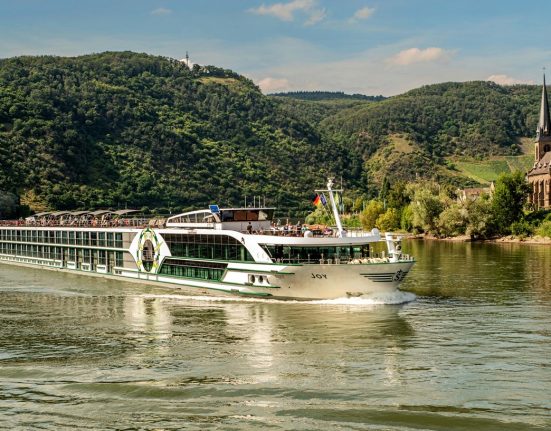
With its sharp focus on European waterways, increasing global presence, and a massive newbuilding programme, AmaWaterways has attracted attention with its surefooted expansion in recent years – not least its decision to enter the nascent market of Colombia’s Magdalena River.
By Mikkel Woodruff
In the 1990s, for most tourists it would have been unthinkable to visit Colombia, despite its unparalleled attractions, because it was a country so characterised by violence and drug cartels. This perception has changed: Colombia is now among the list of aspirational destinations for not just intrepid but also more discerning travellers.
For a cruise line, though, it still takes a visionary to spot an opportunity and endure the risks for an eventual payoff. When AmaWaterways was dreaming up where to grow next, they boldly turned to South America, with Colombia high on the company’s list of expansion targets. But without infrastructure in small communities along the Rio Magdalena – a river that had been used only for commercial shipping for the preceding 60 years – could sailing a luxury cruise work?
“At first, many people thought it couldn’t be done,” said Kristin Karst, AmaWaterways’ chief brand ambassador and co-owner. “They thought we were crazy. There hadn’t been tourism on this part of the Magdalena for decades, and the idea of luxury river cruises seemed impossible. But that’s how we’ve always approached innovation at AmaWaterways – when we believe in a destination, we don’t give up, and we find the right partners to help bring that vision to life. We also knew this project could create sustainable tourism, generate economic opportunities for local communities, and showcase Colombia’s extraordinary culture to the world.”
Triumphal start
A partnership ensued with ProColombia and Cormagdalena, both official governmental departments. It took more than five years to develop the river cruise itineraries, with pre- and post-cruise land options in Medellín and Panama City that would entice luxury river cruise clients, to be sustainable for the villages and cities visited and to benefit local residents.
What resulted were two river cruise ships, the 2025-built AmaMagdalena and AmaMelodia, and two itineraries: Magic of Colombia and Wonders of Colombia. The first sailed from Barranquilla to Cartagena, and the second did the same itinerary in reverse. The ships have a maximum capacity of 60 and 64 guests, respectively. The impact has been far-reaching, positively affecting the lives of locals and how visitors perceive the nation.
In July 2026, AmaWaterways celebrated its 100th Magdalena River cruise and 5,000 guests. Around 70% of the guests it has carried so far on these itineraries were from the US, 15% from Canada, 4% from South America (more than half of whom were Colombians), 3% from Australia and the UK, 3% from continental Europe, and the remaining 5% from other parts of the world.
When we spoke with María José Silva, leisure tourism manager at ProColombia, it was evident that they worked hand in hand with AmaWaterways. “We helped them through the whole process,” she said. “Not just on the tourism side but also on the investment side. We consider them an investor in our country, and ProColombia supports foreign direct investment. We’ve essentially been their eyes in the country, helping coordinate with government entities and ministries to support them being here and promoting Colombia through their ships on the river.”
CruiseTimes sailed on AmaMagdalena in July 2026, and on every level, AmaWaterways’ calculated leap of faith – in its partnerships with the Colombian government entities and with the country’s residents – was a triumph. The evidence lies in each piece of an AmaWaterways journey on the Magdalena River, from the tangible to the intangible.
The vessels were built in Colombia and are filled with Colombian art and design. Camilo Restrepo spearheaded the creative vision, and the ships’ woodwork was created by Cartagena-based Ocean Projects. Marianna Schlegel Donado, creative director of Casa Schlegel Donado, designed the stateroom interiors. She is also AmaMagdalena’s godmother. The art pieces adorning the ships’ walls purposely evoked memories from port visits and were created by artists from Cartagena’s Getsemani neighbourhood.
Guests experienced port programming along the river with expert guidance. Three river guides were assigned to each ship, and they stayed with guests throughout the cruise. These guides had been trained for each destination and acted as on-the-ground translators, sharing in English what the local community guides said to the groups in Spanish.
To prepare local guides and businesses, ProColombia ran a year-long programme with local communities, called The Tourism Export Route, before operations began – not to mention the investment that AmaWaterways put into training its crew. ProColombia’s goal was to teach small and medium-sized businesses how to adopt international service standards and adapt their products for international visitors, since previous tourists were mostly of domestic origin.
Favourable impacts
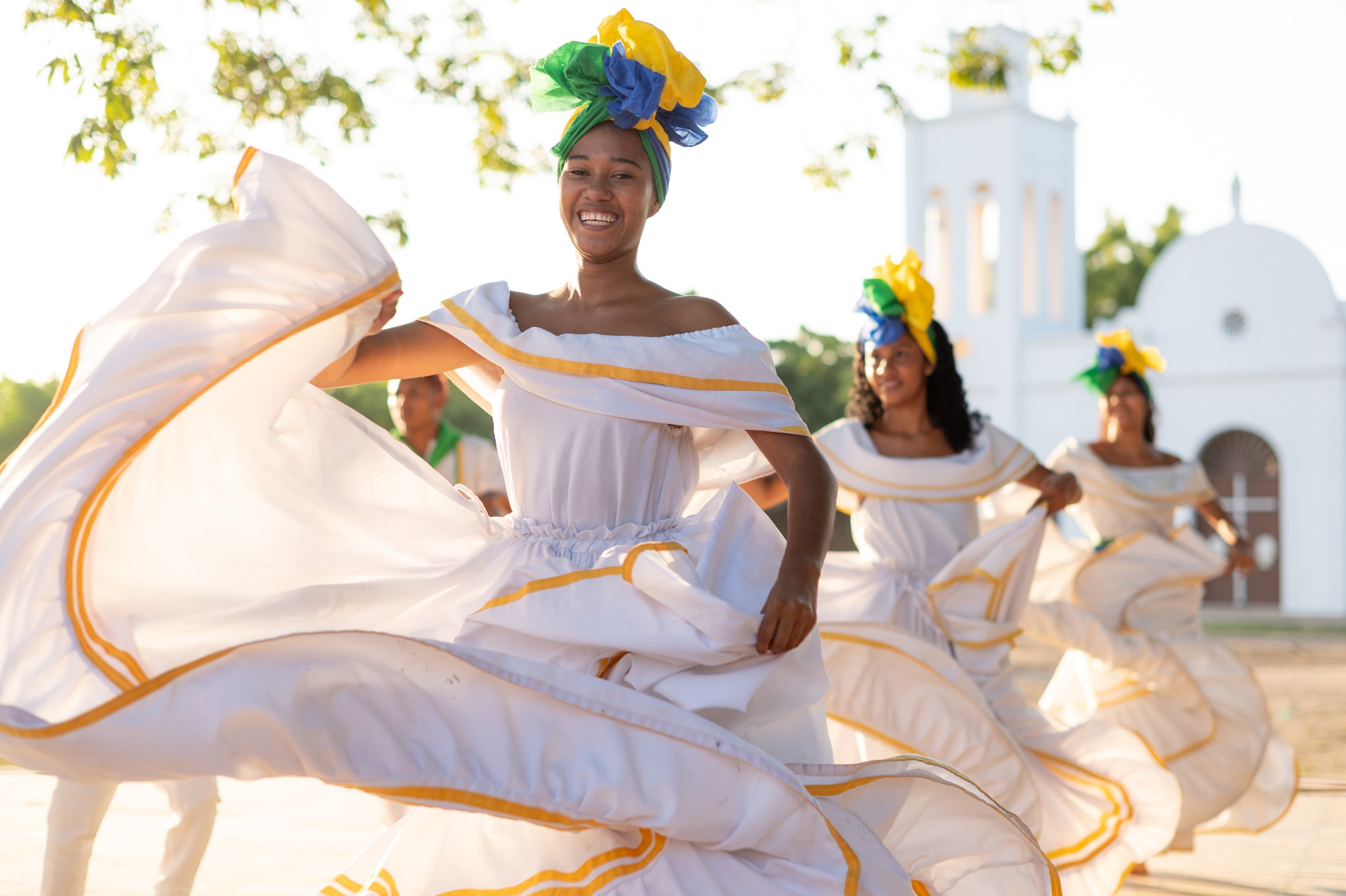
The mayor of the city of Calamar, Yelitza Castellar Ruiz, expressed to CruiseTimes the favourable economic impact of this tourism on her community. She said that the women who sold their handicrafts during a specially arranged dance performance for AmaWaterways guests at Calamar’s House of Culture were heads of households who hadn’t had work or an income of their own before the river cruises began.
The same economic independence was now enjoyed by the men who pedal the bicycle taxis (“bicitaxis”) to convey guests from where they disembark from the excursion boats to Calamar’s performance venue. As part of the programme, they received new vehicles. When AmaWaterways’ guests were not in town, these men could take on additional work by using their bicitaxis to transport deliveries from the river to local businesses.
A similar sentiment was shared by bilingual guide Jhon Muñoz. He was a contractor with Caribia Tours, which partnered with AmaWaterways in Barranquilla. He had a nine-to-five job at a call centre in the city, but adored his job as a tour guide, seeing it as an extension of his love for the city.
Muñoz expressed his gratitude towards AmaWaterways, saying that the tourism it brought had improved his life in financially and emotionally fulfilling ways. He enjoyed sharing his expert knowledge about Barranquilla with visitors. Previously, he would get only one tour every two months or so. Now, AmaWaterways has brought steady work every two weeks. “Ama is a pioneer. Having this as another form of income, it’s definitely incredible,” he said.
José Silva noted that the cost of a river cruise was significant when considered alongside the numbers of guests that AmaWaterways has brought since cruising began in April 2025. River cruises attract high-spending travellers, with packages offered costing around $3,000 to $6,000 per person. Ultimately this generated jobs for Colombians, a main goal of ProColombia.
“For this particular project, there’s been an investment of more than 37 billion Colombian pesos – roughly $10 million – in municipalities along the riverside,” said José Silva. “That investment supports around 83 projects across key areas: infrastructure, destination promotion, competitiveness, and responsible tourism best practices, spread across departments in the Caribbean region: Atlántico, Magdalena, and Bolívar. It’s a lot of people working toward one shared goal, and it’s a major priority of the current government.”
Local connections
One of the infrastructural investments needed for this project was the construction of river docks in key cities. Though there were existing docks in Cartagena, new docks were constructed in Barranquilla and Mompox – two cities anchoring AmaWaterways’ Magdalena River cruise itineraries – for guests’ convenience in prime locations.
In the small community where the ships dock near Palenque, the first free African town in the Americas, AmaWaterways rented space on a local farmer’s land. There they built steps and a pathway from wood and gravel so that guests could comfortably disembark. In another area, guests boarded an excursion motorboat directly from the first deck of AmaMagdalena or AmaMelodia for a visit to the village of Santa Bárbara de Pinto. Each vessel had three dedicated excursion boats that were also employed as shuttles to transfer guests from the ships to towns. The same boats are used for a birdwatching tour, and in the case of low river levels to reach ports, much like European river cruises use buses to transport guests on land when confronted with similar water-level woes. This solution was created by AmaWaterways, ProColombia, and Cormagdalena, because the road infrastructure to get between the cities and villages was not in place.
While AmaWaterways has been able to depend on ProColombia and Cormagdalena for help with things like building docks, other challenges require a different approach. Trusting the Colombian crew’s connections with local providers has proved vital to the programme’s success.
Chef Sebastian Coronel noted how far the culinary programme had come since its inception. “When we started this project, I went to the communities and told them about it, and at first people didn’t believe it was real, or even possible,” he told us. “But once they saw it was real and saw the scale of the project, it changed their perspective. Now there are towns along the river that depend on it for both formal and informal work. These communities now have the opportunity to earn money. I buy from local suppliers regularly, cheeses and other products, always making sure of quality and safety first. We buy pineapples, corn, potatoes, and whatever else the communities grow.”
Mayor Castellar Ruiz mentioned residents’ enthusiasm for improving Calamar’s buildings in general, now that AmaWaterways was bringing tourists to town. She said her community was committed to maintaining and improving its infrastructure and historic buildings to remain attractive to big companies, such as AmaWaterways, should more cruise lines consider coming to town. While change may be slower in some locations than others, it was evident. Improvements like these helped remedy the unfair perception of Colombia being the Wild West of tourism.
As for safety, multiple tour guides assured their guests that they should feel safe throughout Colombia, dismantling the stereotypes and tropes of the past. They hoped that the cruise guests could become ambassadors of Colombian tourism.
Inevitable challenges
Aside from safety and infrastructural issues, other challenges were inevitable. Some were usual, some unusual. CruiseTimes asked AmaMagdalena’s pilot, Anderson Acuña, if he was concerned about water levels being so low sometimes that there was only half a metre of water separating the ship from the muddy bottom of the river. Acuña, who has over a decade of experience navigating the Magdalena River, said he had piloted commercial vessels with far more weight than AmaWaterways’ ships in more trying situations. On that basis, he was confident he could navigate the river with cruise guests on board.
Training locals to embrace a shift in mindset regarding foreigners entering their towns and communities was an unusual challenge. CruiseTimes, while visiting the ports, heard several stories on this topic revealing that any scepticism had stemmed from an initial inability to comprehend what luxury river cruising could mean for the community. Locals’ perception of tourism had to be reshaped so they could envision the economic growth and development that sustainable tourism could bring. They wanted to know that they would benefit too, and that cruise tourism was not about exploiting their land or culture. It was clear that the implemented year-long training programmes helped everyone reach the finish line.
Karst of AmaWaterways was candid about another obstacle. Midway through the project and negotiations, the Colombian government changed leadership, so they had to essentially restart contracts and agreements from scratch. Overcoming these challenges would mean having built firm foundations for a successful long-term programme.
Looking ahead
Though the current itineraries focus solely on the river’s lower basin, it is tempting to imagine what expansion might look like in its middle and upper portions. José Silva hinted at future expansion to Colombia’s Cauca River when discussing possibilities and mentioned a possible third ship, affirming ProColombia’s commitment to sustainable growth.
“Colombia has shown what’s possible when you combine luxury with meaningful cultural discovery,” Karst said. “It has become a playbook for how to thoughtfully open an entirely new river cruise destination, and we’ve learned what it takes – building strong local partnerships, investing in communities, navigating infrastructure, and long-term planning. As we look ahead, we see opportunities to bring the same approach to other emerging destinations, always thoughtfully and responsibly.”
AmaWaterways’ luxury river cruise programme is the start of a dream for so many Colombians. As the warm and friendly locals and crew members shared with CruiseTimes, it brought an important river with a fading heartbeat back to life. This spectacular waterway has been revived, alive with excitement and joy, casting a vibrant spotlight on the history, culture, and destinations of a renewed country.