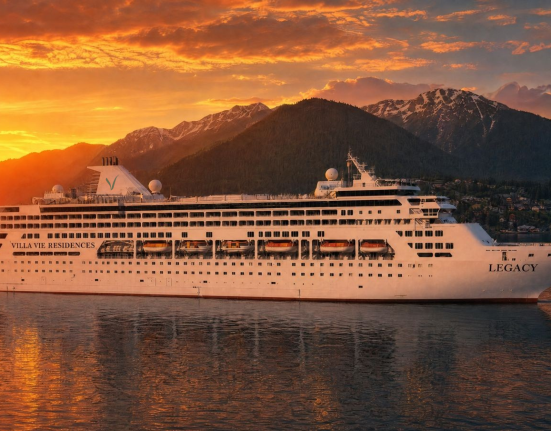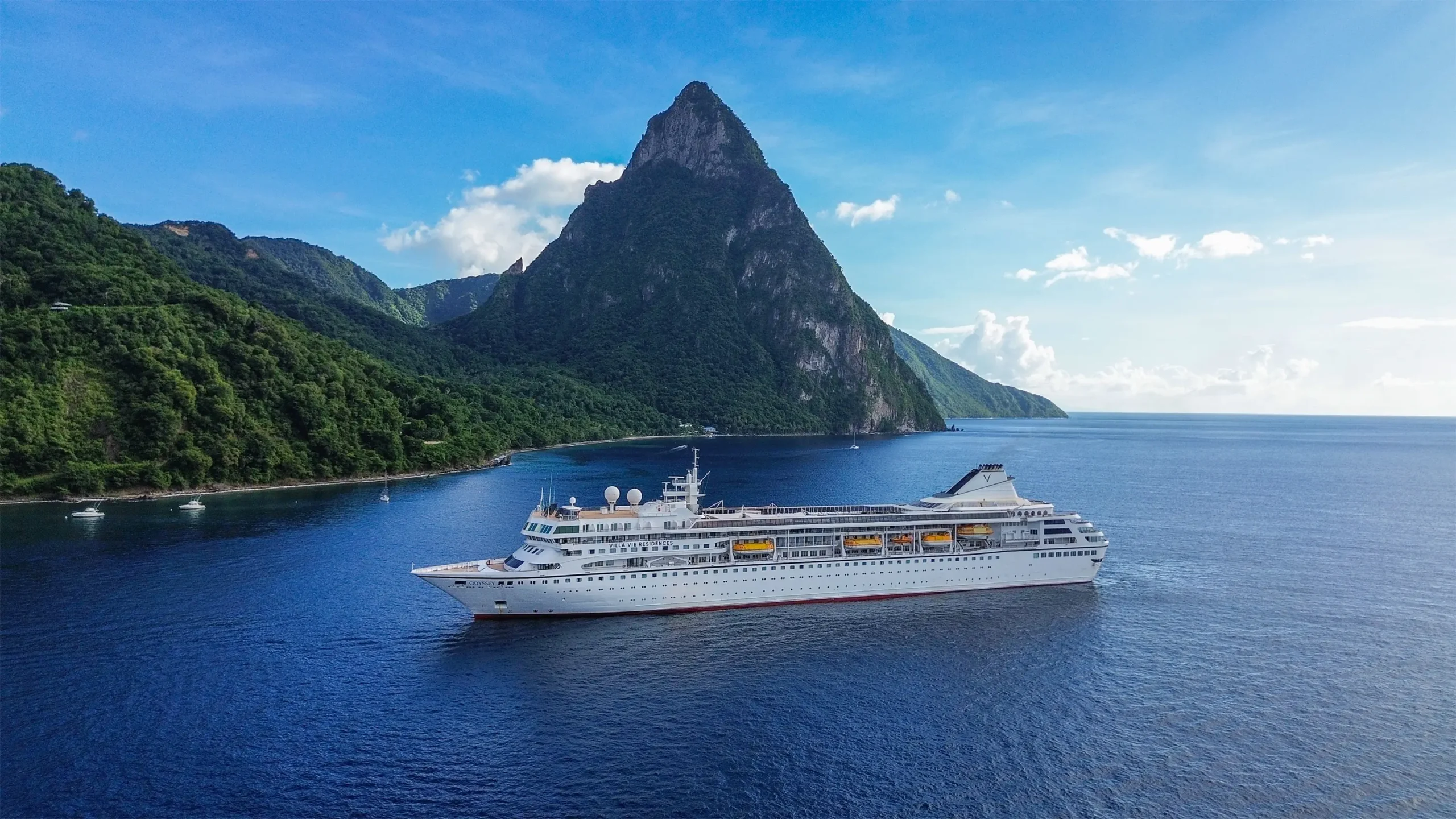
The difficulties faced by residential cruise ship Villa Vie Odyssey and the company that owns it raise the question of what potential promoters of similar schemes could learn from this ill-fated venture.
One obvious observation is that such an operation should have sound finances. A residential cruise ship project can raise significant cash by selling cabins, and a high percentage of these should be sold before the launch. There are two reasons for this.
The first is to fill the coffers with as much cash as possible: this should be a function between price and demand. Unsold cabins do not provide the initial cash injection that sold ones do, and they do not generate any service charges either.
Importance of service charge
The service charge – what cabin owners pay monthly to the ship owner – is the second reason. It should not be a fixed amount, because the vessel’s operating costs are not fixed either. In the case of Villa Vie Odyssey, a sharp increase in bunker prices has been reported as a key reason for the company’s financial difficulties.
Instead, the service charge should contain a bunker adjustment factor that allows it to be increased, so the company can continue to operate without facing a liquidity crisis.
The charge should also have an element that raises funds towards future needs to upgrade and refurbish the vessel and to help cover costs of unplanned repairs that may occur.
The number of cabins that can be sold is limited and cannot realistically be increased, so cash flow from the service charge is a vital income stream for a residential cruise ship operation. A fixed monthly charge may tempt a prospective buyer of a cabin, but it can be a kiss of death to the ship owner.
What do you actually buy?
Prospective buyers of cabins need to think about what exactly they are buying and what happens if the ship owner runs into problems. Maritime law allows, in principle, certain claims to be raised against the ship itself, rather than the company that owns it.
Cabin owners, who have the right to control a particular cabin on board the ship, have a contract with the ship-owning company. In the case of Villa Vie Odyssey, it means that they are unsecured creditors and that creditors whose claim is secured against the ship have priority to have those claims met.
If cabins owners collectively own the vessel, they obviously have far greater say in how the business is run, compared to a situation where they have only an immaterial right on a vessel owned by someone else. This option, however, would mean significantly higher capital outlay by cabin owners, and they would have to accept that the ship depreciates in value over time.
As a ship ages, the amount of money needed to maintain it in compliance with its flag state, class, and other rules and regulations will increase. Before the Covid-19 pandemic, a few cruise ships built in the early 1970s were still in service, and some were fitted with new engines after about 35 years of service. Such work is expensive, but it may become inevitable.
Newbuilding: tailored but costly
A newbuilding offers several advantages over a second-hand vessel: it can be built to meet the owner’s requirements, and its operating costs would probably be lower. But the initial capital outlay would be much higher, and this would inevitably affect the cost of life on board.
Building a single vessel to specifications that can differ quite markedly from those of a cruise ship means that a residential ship project can involve a higher risk to the builder. Very large cabins cannot be built as modules but rather need to be built on board, and cabins having their own kitchens can have implications for fire safety regulations. Such details can add to the cost of the ship.
A ship tailored to a specialised market may be difficult to sell should the owner run into problems. This is another aspect that financiers, be they equity- or debt-based, need to think about as well.
The World, which was purpose built as a residential cruise ship, in 2002 became the first such vessel to enter service. Since then, a plethora of schemes have been introduced, based both on newbuildings and on conversions of cruise ships. Villa Vie Odyssey, which was built as Crown Dynasty in 1993, was only the second residential cruise ship to actually set sail.
The concept remains an exciting one, and it is quite possible there will be further chapters to it. But it may also be true that someone aspiring to live on a ship may be financially more protected by booking several back-to-back cruises on a ship of an established cruise shipping company.