Effective pitching to cruise lines is not simple. Getting it right can bring calls. Getting it wrong – lack of preparation, a misjudged presentation, lack of time to hear crucial voices – can get you struck off the list. We spoke with cruise executives and ports and destinations about making the best possible pitch.
By Susan Parker
In business as in research, homework pays off. When I contacted John Portelli, general manager of Roma Cruise Terminal, for this article, he had already jotted down the salient points he wanted to make about pitching effectively to cruise lines, showing the value of thoughtful preparation.
“One has to be prepared. It may sound obvious, but it’s not happening,” he told me. He does not just mean knowing what makes each cruise line tick but also knowing the ins and outs of the port or destination being pitched. He makes it his business to know as much about the destination as the port he represents.
Be prepared
Crystal Morgan, senior director of deployment and itinerary planning at Seabourn, has experience of ship brands large and small. “Rule number one is, know the brand you are pitching to,” she said. “If you are a port coming to Carnival, you’ll have a 100 per cent different pitch to coming to Seabourn.”
If you are trying to get high volume in a port, for instance, it won’t come from Seabourn. If you’re a remote destination in Spitsbergen, you won’t get Carnival calls. “Knowing what the destination can bring to the brand is vital. It is knowing where you fit into the mix,” said Morgan.
It’s worth mentioning here the scale of what a cruise line team deals with and how welcome the right pitch can be. At Carnival Cruise Line (CCL), senior director of deployment and itinerary planning, Ugo Savino, said: “When we offer 1,800 sailings a year, and we have three years of inventory open, we manage roughly 20,000 ports of call at any given time”.
This underlines the need for clarity and follow-up: “Once the programme is closed, that window is closed, and that ship has sailed,” said Savino.
Often, certain questions cannot be answered during a meeting, so rapid follow-up is vital. As well as addressing the questions, this can reveal how efficiently a call will be handled on the day.
Savino gave an example of CCL struggling to devise an itinerary featuring Prince Edward Island because the availability in neighbouring ports was not clear. So the people at Port Charlottetown got on the phone and found out, then went to CCL with the relevant dates.
Savino was impressed: “I don’t expect all the ports to do the work for us, but that shows they listen, they appreciate the problems, and they realise that if they don’t get us the information today, they are not going to get the business.”
Avoiding mistakes
In such a competitive market, there are seldom second chances. Morgan explained: “I have a list of ports I’m not going back to, for example one in Japan where they put us on a cargo pier for a second time when we had already said no.” Another no-no is reneging on a port booking: “In Seabourn we get bumped a lot. We end up with the ‘We confirmed you, but so-and-so is coming in’. Those ports are also off my list.”
On the port side, Portelli said: “If you go badly prepared, your credibility will suffer, and you’ll have a hard time to sell your terminal facilities and the destination. Humility is key here. Never work on your own, and don’t be shy to ask cruise lines and other terminal operators what you need to do and how best to pitch your offer.”
The port and destination working together is important; for Portelli, seeking support from agents is also key: “They’re your ambassadors with the cruise lines, and they know them better than you do. Try to present a common front.”
Socks, not skirts
Knowing the brands before a meeting is vital – it ensures that no one wastes precious time. Morgan acknowledges that it takes research and knowledge to get this right, and said it may be even worth paying for a market research analyst.
Also important is not being afraid to ask questions, even if they seem silly, rather than just going along with things. Say you walk into a shop to buy socks, and they try to sell you a skirt, it doesn’t matter if the skirt is beautiful – you need socks.
Savino, who has welcomed many ports and destinations to his offices, said: “If you don’t flex your communication style, if you don’t understand what is relevant to your audience, you cannot be effective. Your approach has to be different based on the cruise lines you’re having a conversation with, because ultimately the decision drivers are different.”
He described a port representative spending 45 minutes with his team to no apparent avail. It was only when Savino accompanied him out of the office that the rep mentioned, in passing, that the cost of fuel in his port was the cheapest in the region. That one thing resonated with CCL, and it was the only slide he needed in his presentation.
The sale as a solution
Presentations must be tailored to fit the audience. That also goes for people being pitched to. Giving an itinerary planner a mass of shorex information is no more helpful than talking to the shorex team about port operations. As manager of destination experiences at Silversea, Susanna Capaccio has clear, specific needs: “For us, the most important thing is what is the most unique attraction of the place.”
At Prince Edward Island, the key is to build trust and relationships, according to Mike Cochrane, CEO at Port Charlottetown: “Whether selling cruises or widgets or candy, if you don’t know what your client wants or needs, you have to put yourself into their shoes. Really you have to ask yourself, What can I do to make it attractive for them to get here?”
Savino sums it up like this: “At the end of the day, it’s a sales pitch. Sales happen when a service or a good represents the solution to a problem, and when the benefit of the solution is seen to be of higher value than the cost, then the transaction happens.”
Making it worthwhile
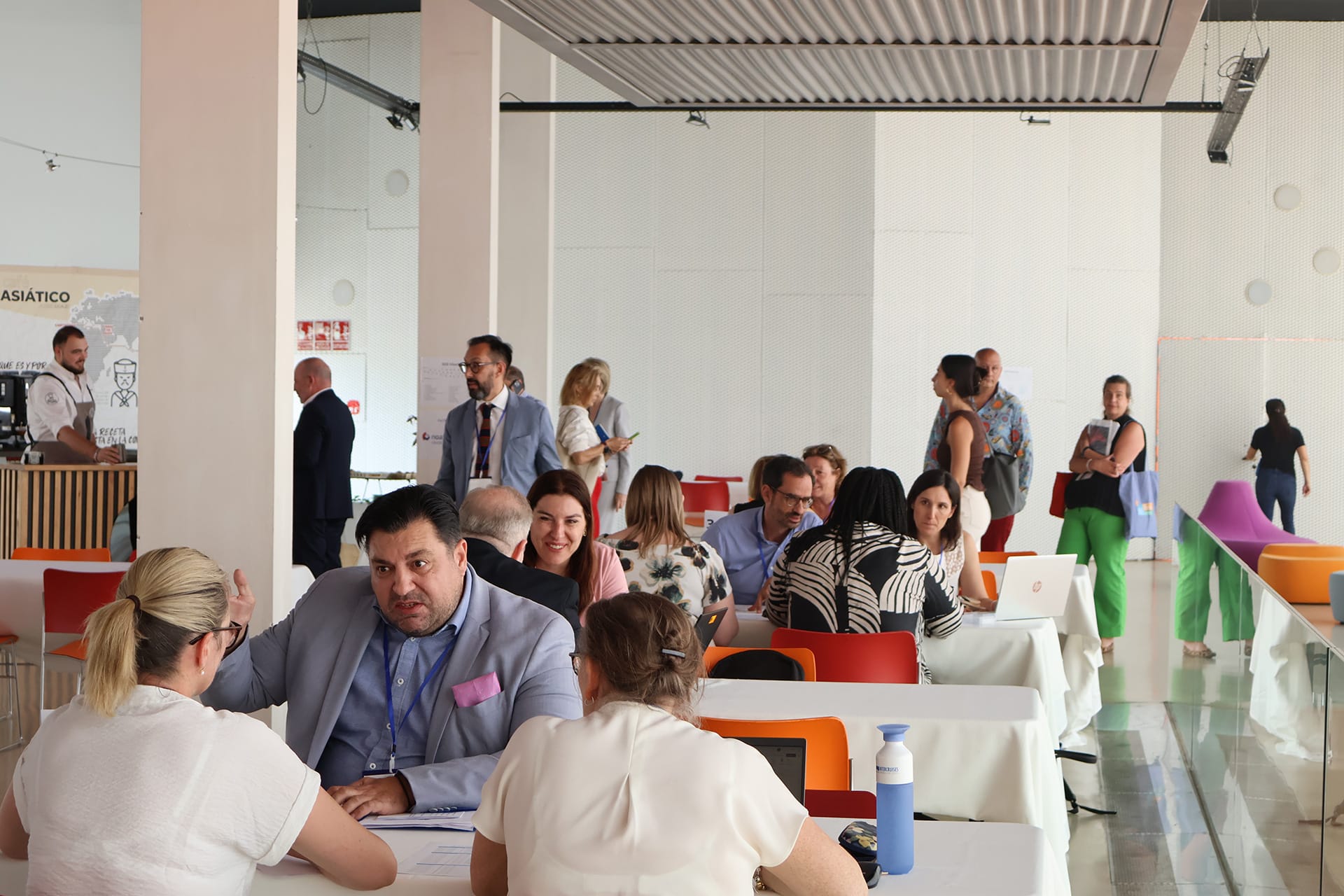
Visits to cruise line offices are welcomed, but they need careful planning to ensure the right people are in the room. “In general we always like it when people come to show us what they have to offer,” said Capaccio. “Also it’s a good sign, because it means they’re interested.” She requests a brief video or pictures for any meeting, as some visitors arrive with nothing.
Assembling teams from cruise lines and ports or destinations can mean large numbers from varied specialities and hence require considerable time. With a dozen or so people meeting for 30–45 minutes, this is equivalent to a full working day. Flights and accommodation can also be a big chunk of a port or destination’s budget.
To ensure it’s worthwhile, everyone must be highly prepared. For Savino and his colleagues, the objective is clear: “I want to leave a meeting feeling it was productive and informative.”
The right decisions
When pitching, it’s important to understand how different lines decide where their ships go.
For cruise lines that tend to repeat a programme, such as CCL, MSC, and Royal Caribbean International, deployment decisions come before itinerary decisions. For those that tend to have more unique itineraries, such as Regent Seven Seas, The Ritz-Carlton Yacht Collection, and SeaDream, it’s the reverse.
Pitching a one-off festival to the first group will have no effect; pitching it to the second may yield rewards.
Revenue matters for some more than others. “The risk of doing something different on Princess [for example] is about revenue,” said Morgan. “When talking volumes, shorex revenue is really important because it adds to the whole bottom line. You’re leaving money on the table if you say you’re going to Stornoway instead of Belfast, because you’re not going to make up that revenue.”
As another example, sea days can be money spinners for the big lines, but for an all-inclusive brand like Seabourn, the decision is more likely to focus on additional days in port. Knowing the context is critical to making the right call.
Transit and turnaround
Transit and turnaround ports are very different propositions. Again they require brand knowledge but also an understanding of the operational differences.
Portelli has history with both. “After you understand the market, prepare a strategy,” he said. “Turnaround and transit are two different factors. When I was in Malta, Rhodes, and now Civitavecchia, I went around in order to know what’s on offer, but I also need to be very much aware of what I can offer as a terminal operator.
“Can we offer transit, turnaround? What facilities do we have? And what can we provide in the future with investment? You need to be aware of the impact on the hinterland if successful, particularly close to the port.” Being close to Rome may seem a shoo-in for calls. However, as Portelli said: “It helps with turnaround and transit, but you can never sleep.”
There may be silver linings waiting to be noticed. Understanding that repeaters may want something different has led to a welcome increase in tourism for Civitavecchia and nearby communities such as Allumiere. As Portelli told CruiseTimes, “We are not just terminal managers but have become community officers.”
It’s important to be realistic about what you can offer, such as with turnarounds. “For smaller lines, I think there is an opportunity,” said Cochrane, referring to Prince Edward Island. “But for larger ones we don’t have enough airlift and hotel capacity.”
Association initiatives
Effective pitching can also come from regional associations, such as MedCruise, Cruise Europe, Cruise Baltic, and Cruise Norway. This could be through arranging one-on-one meetings or producing port availability tools.
Savino described Cruise Baltic publishing a call schedule as a great initiative: “Having a calendar is really helpful. I don’t need to know who is in port, but I do need to know if there’s a pier available. I still need to receive information from the ports, but at least I know the itinerary is feasible.
“That’s an example of how you properly understand the needs of a cruise line and therefore you try to propose a solution,” he added.
Morgan told CruiseTimes that she has always used Cruise the Saint Lawrence as “a hallmark of how to do it”, whether it be one-on-ones providing the elevator-pitch opportunity, or road trips.
She also mentioned Cruise Norway’s January day of online meetings, and the association’s “very good website, which recently has a tool where you can see availability in Norway, which is really helpful”.
Growing with purpose
In terms of successful pitching, Saguenay was singled out as a port that developed and improved both its offering (including its welcome ceremony) and its infrastructure to a point where lines such as Princess no longer just go upriver but call at this gem on the Saint Lawrence River.
Morgan cited Saint John in New Brunswick as a port that has grown with purpose, going from a lumber pier in 1995 to now having dedicated facilities. “From the start they were in it for the long haul. Rather than needing calls each year, they had a budget and a strategy. They listened – and look where they are now.”
Acapulco was struggling to get calls from CCL due to security issues. “They acknowledged the problem and took serious action to address all our security concerns,” Savino said. “They invited us to visit and give them feedback on issues they could work on proactively, which they did.” The result was that CCL called on a deviation recently and now has a schedule in place. “Through hard work, they have achieved success,” said Savino.
The next step
Cruise the Saint Lawrence, under executive director René Trépanier, has made its way onto the cruise map in the last 20 years through effort and what he calls “cool harassment”. Over the years, the association has provided its members with the tools to tell their story effectively and bring ships to the region.
Referring to the wider Cruise Canada New England membership, Trépanier said, “We have created a partnership with CCNE to do more towards the network of the travel agents. We are working with the cruise lines themselves, so we will be there with them when pitching to travel agents.” A trial run with Holland America Line has already taken place.
This endeavour will answer Morgan’s questions: “What are you doing to encourage guests to come to the destination? What is the region doing to say this is a really cool place to spend your vacation?”
“It’s about being who you are,” said Trépanier, who fully understands how much we all value connection. “We are an industry of people, and at the end of the day my goal is to make sure the Saint Lawrence is an authority and well positioned in the CCNE network. I think the word is passion.”
He offered some advice: “Don’t put too much stress on your shoulder to have the best pitch ever, but make sure to connect. Don’t just pitch – interact.”