By Brittany Chrusciel
Disruptors in any industry tend to have a very forward-thinking approach to their goals. In 1997, Norwegian businessman Torstein Hagen purchased four river ships. By 2000 that number had jumped to 26 ships, making Viking the largest river cruise fleet in the world.
Fast-forward to April 2026, and Viking is named one of the 100 most influential companies in travel and tourism by TIME magazine. Viking continues to dominate river cruising in the US, with 52% market share of outbound river cruises by North Americans.
After 30 years of operation and a recent leadership change – Hagen named president and CFO Leah Talactac as CEO in May 2026 – it’s a good time to look at how Viking is impacting the cruise industry and building a thriving business.
It is a business that boasts a robust outlook, with $6 billion in advance bookings (booked year to date) and 86% of its capacity in passenger cruise days sold as of 15 February 2026.
To gain some insight into what Viking does differently from competitors, and why, CruiseTimes spoke to Michele Saegesser, Viking’s vice president of sales and national accounts, who has been with the company for more than 25 years.
In the course of our conversation, five themes emerged. Some, like prioritising guests, are not especially revolutionary but have paid dividends. Others, like marketing ships secondarily to destinations, were considered groundbreaking at the time they were introduced. We’ll look at each theme in turn below.
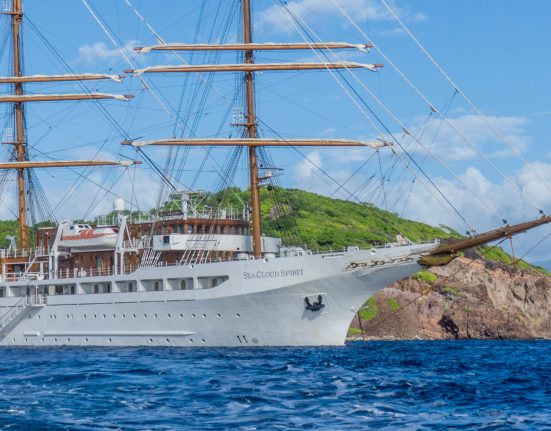
Today, Viking is a cruise line trifecta, serving river, ocean, and expedition, with a fleet of 103 ships – and constantly expanding. Its presence spans more than 500 ports across 85 countries and all seven continents, as well as five oceans, five Great Lakes, and 21 rivers.
For perspective on Viking’s promising future, let’s look at those underlying themes: what they’ve done consistently to get to this point.
Obsess over the guest
If you’ve received any marketing materials from Viking in the mail lately, you might have read these words verbatim from founder and executive chairman Torstein Hagen: “We obsess over our guests.” It’s one of Hagen’s four fundamental principles, alongside “We treat our employees like family”, “We take a long-term view”, and “We do what is right for the environment.”
What obsessing over the guest means, of course, is not just providing consistent service when the guest is on board, but also obsessing over who the Viking guest is, what they want, and how that affects the overall product.
“I can tell you that no decision is made without exhaustive research and development from our guests,” Saegesser told us. “The guests have told us what to build; they’ve told us what they wanted. And that is why it’s stayed consistent. Because the guest has not changed over the years in terms of what they want. They like the consistency, and they like that once they step on board, they know exactly what they’re going to get.”
Let others call you luxury
Viking, at Hagen’s insistence, has long avoided calling its product luxury – while winning accolades in luxury cruising categories. By declining extravagant self-definition, the brand has laid the groundwork for one of its greatest secrets to success: under-promise and over-deliver.
“What Tor wanted to create after all the success of river cruising was this ledge that didn’t exist,” said Saegesser. She explained that because people have varying definitions of what a luxury product is, it can be difficult to meet guest expectations with luxury as a clarifier.
The result? “Tor created this special product that was not a premium brand but not a luxury brand and fit right into what the Viking demographic wanted: something that was consistent, thought-provoking, that spent a lot of time going into ports – smaller ports – and making sure that the experience was there,” Saegesser said.
“At the time, river cruising didn’t need that luxury definition – it does now – but ocean ships always did,” Saegesser said. She explained that when it came to the onboard experience, Tor Hagen always wanted guests to feel at home. She said that “comfort” was his guiding word, and the idea that “comfort means luxury” has been a controversial one over the years.
As anyone who has seen a Viking commercial or heard a radio spot can tell you, its tagline has long been “Exploring the world in comfort”.
“To me, it means your shoulders come down and you sit in an environment that you feel great in,” Saegesser said. “And I think what Tor created in the design of the ocean ships, in particular, are many quiet spaces. Places where you just feel relaxed.”
Focus on destination over ship
While an in-depth focus on the destination has become a travel trend, it was a radical concept when Viking unveiled its ocean ships in 2015 (having announced them in 2013).
Tor Hagen’s provocative stance on eschewing the luxury label was joined by another pioneering philosophy in ocean cruising: Let’s talk less about the ships and more about the destinations.
“Back then, that was a completely crazy thought process – for advisors and the consumer – because everyone talked ship, ship, ship,” said Saegesser. In that way, Viking has set itself apart by focusing most marketing efforts on its guest experience rather than the hardware of the ship.
The difference shows in Viking’s ocean deployment compared with other large cruise lines. According to 2025 passenger capacity figures by deployment region, Viking dedicated 55% to Europe and 4% to the Caribbean, while other lines dedicated 67% of deployment to the Caribbean and just 7% to Europe.
“Advisors don’t have to learn all the deck plans; if they know a few, they’ve got it down,” Saegesser explained. “So the advisor likes that they have a lot of inventory to sell, but it’s primarily the destination we’re talking about.”
The Viking fleet is intentionally designed to feel familiar – near-identical, even – across each ship and even across categories of river, ocean, and expedition. While every ship is outfitted with thoughtful amenities and cosy furnishings, you won’t find Viking touting the hottest new venue on its latest ship.
“People are not coming on board for the carpet; they’re coming on board for so many other things,” Saegesser said. “But unfortunately, there are cruise lines who do sell on the carpet. Our guest is not looking for a new theme restaurant or a new bar every night. They’re looking for ‘What have you changed on the shore excursions? What in-depth programmes have you brought on board?’”
The no-children policy
At first glance, precluding kids from a cruise ship doesn’t seem like a great advantage. What if someone wanted to bring their grandchildren along? But the policy, in effect since 2015 on Viking’s ocean line and since 2018 on its river ships, is about much more than maintaining a mature atmosphere on board.
“The no-children policy is actually beyond brilliant in ways that people don’t think about,” Saegesser told us. “The Viking guest is not worried about spring break or kindergarten or college graduation. So what it’s allowed Viking to do is have a longer sales cycle than anybody else. [It] has helped me be able to explain to a travel advisor, in training, why they have to stop chasing the tail of this year and begin looking one or two years down the road – and why they can. Because the guest is not making the same decision as someone who is booking a family ship.”
Fellow brands like Oceania Cruises have recently announced a shift to adults-only on board. But Saegesser said it will take time to catch up as the under-18 crowd cycles out of existing bookings. “We sell fast, and we sell farther out. And a lot of that has to do with our no-children policy,” she said.
Market like a machine
Viking is a marketing powerhouse. It knows its demographic: age 55+, English-speaking, well-educated, affluent, curious, and active. And it’s not afraid to go after them.
At an event in New York City on 14 April 2026, Hagen spoke plainly about his view of Viking’s operations, calling them a “marketing company first, then a cruise line”.
“One of the things we do very well is marketing,” Saegesser said. Since its inception, Viking has spent a considerable amount on its marketing efforts: $3.6 billion.
“If a guest comes back (we have over a 50% return rate), they’re already looking for the next itinerary to go on,” she added.
Viking’s internal marketing platform allows it to generate consumer demand with a model that cycles through a massive direct mail database, email database, digital segments, and 62 million unique visitors annually to the Viking website.
“What Viking does very well is share with advisors, statistically, where clients will go next. Where we tell them they are going next,” Saegesser said. “It’s the inner workings of our marketing, and we share this with advisors up to the consortia level.”
She told us that by lending insight into Viking’s marketing funnel, advisors can sell – and cross-sell – more successfully.
“We’re always trying to be ahead of the game,” Saegesser said. “Tor’s philosophy in meetings has never been about what’s great, it’s about what needs fixing. He always wants to be the best, so the focus is on what aren’t we doing to be the best.”